The Mon State Parliament has formed a new committee titled the “Committee for Studying Complaints, Petitions, Submissions, and General Affairs,” with the stated aim of receiving and addressing grievances and complaints from the public.
This development opens a potential pathway for people to raise their voices through the parliament despite oppression and injustice imposed by the military administration. The creation of a communication channel between the public and the parliament is something that should be welcomed.
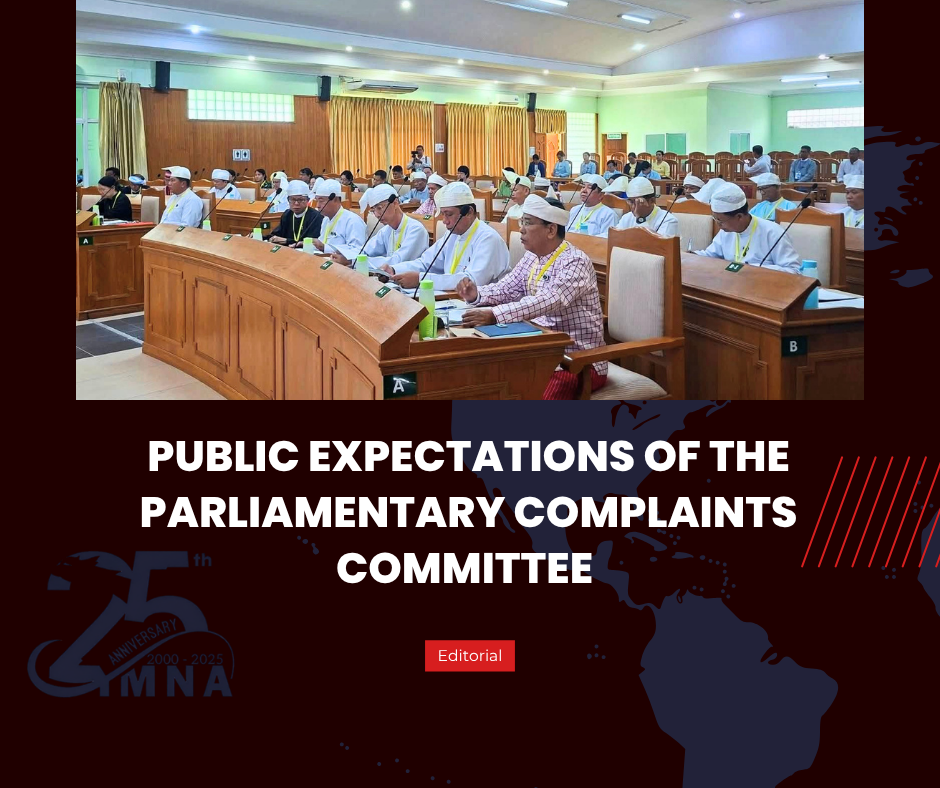
However, when examining the difficulties currently faced by people on the ground and the limitations of the present political context, it remains to be seen whether this committee can resolve public problems, or whether it will be nothing more than a symbolic body.
The public has long endured serious grievances in the state, including land confiscation, corruption amongst various levels of authorities, and the abuse of power.
Under the current military administration issues such as forced conscription and daily human rights violations raise an important question: if such complaints are submitted, can the committee actually hold military leaders and perpetrators accountable? While the establishment of this parliamentary complaints committee is a positive development, the key question remains: how much real authority does it actually have?
If the committee’s role is limited only to receiving complaints, preparing reports, and making recommendations—without the power to effectively take action against administrative authorities and security forces that have committed abuses—then public complaints will ultimately end up buried in parliamentary paperwork.
Furthermore, given the current security situation, it is also necessary for the committee to clearly explain what protection and guarantees it can provide for citizens who courageously submit complaints, in order to ensure they are not exposed to subsequent risks or retaliation.
If the complaints committee truly wishes to earn public trust, it must do more than simply receive submissions. It must establish a transparent system for reporting to the public on how effectively complaints are being addressed. Members of the committee, as parliamentarians, must also demonstrate the courage and commitment to stand firmly with the people and speak the truth without fear of authorities. The public is waiting to see practical results that can effectively hold governing authorities accountable.
We urge the committee to quickly demonstrate that it is a genuine body serving the people’s interests—beyond being a symbolic institution.