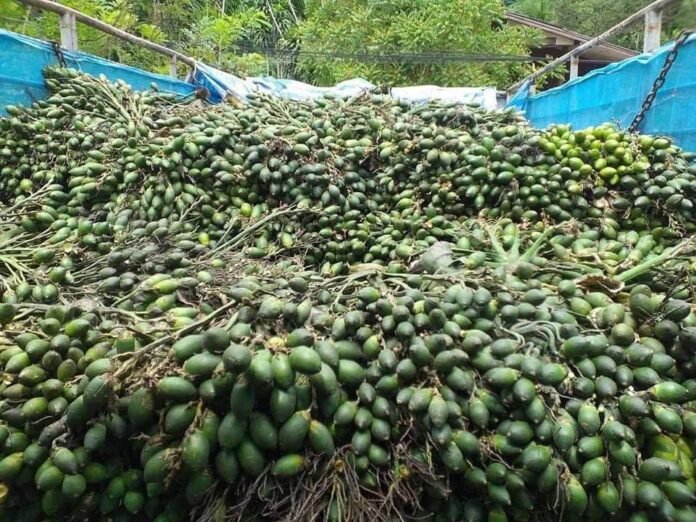
Farmers and agricultural experts in Mon State have warned that the increasing harvesting and sale of young betel nuts due to strong market prices could negatively affect the long-term health and productivity of betel nut trees.
Since 2021, farmers in Ye Township have increasingly shifted to selling young betel nuts, which are in high demand, instead of producing dried betel nuts. The change is driven by difficulties in drying the nuts under sunlight, high labor costs for harvesting, and losses caused by the long rainy season, during which the nuts often fail to dry properly.
An agricultural expert from Ye Township said excessive harvesting of immature betel nuts has already led to lower fruit yields this year and could eventually weaken the trees if proper care is not taken.
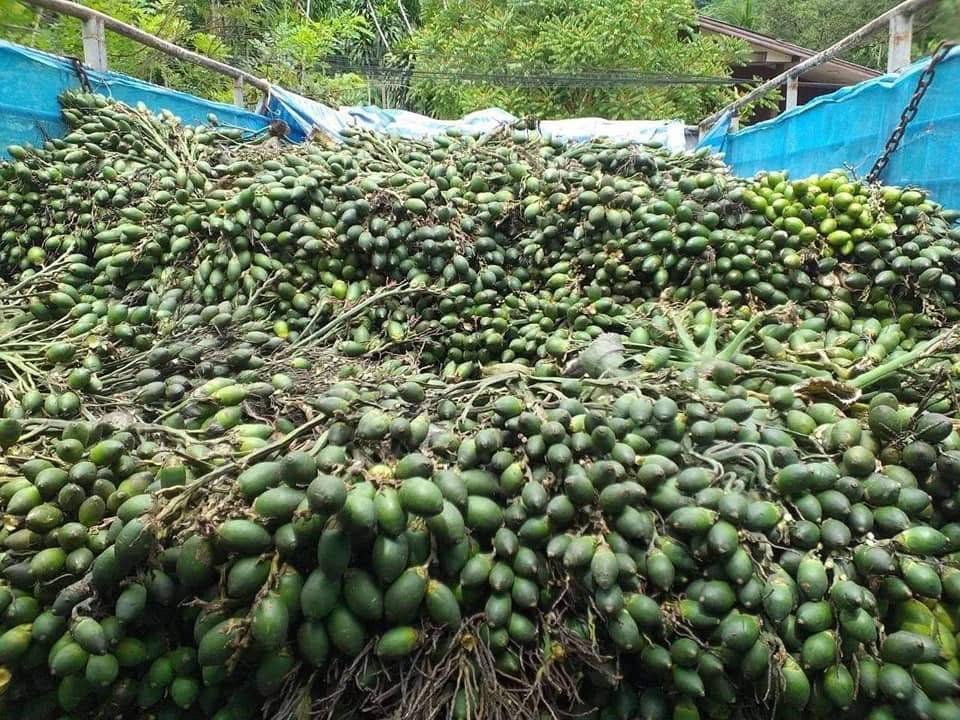
“The clearest impact is that fruit production could decline. However, the signs may not become obvious within one or two years. It may take longer to notice. If farmers continue harvesting only young nuts every year without applying fertilizer or properly caring for the trees for the following season, the trees will gradually stop growing well. Eventually, they may stop producing fruit altogether,” the expert said.
Agricultural experts explained that repeatedly harvesting immature nuts before they fully develop disrupts the natural growth cycle of the trees. Over time, the trees may weaken, yields may decrease, and without sufficient fertilizer, the trees could eventually stop bearing fruit.
Despite the long-term risks, many farmers continue prioritizing the young betel nut trade because of better profits, lower labor requirements, and strong market demand.
A betel nut farmer from Ta Maw Kanin said selling young nuts allows farmers to earn money more quickly and with less work.
“Once the rains begin, we can start harvesting immediately and sell the nuts right away. After that, the work is finished. Producing dried betel nuts requires several processing steps, and prices are only good at certain times. Sometimes we even lose our investment. That is why we now prioritize selling young betel nuts,” he said.
Agricultural experts advised farmers who focus on selling young betel nuts to adopt better cultivation methods, including harvesting on an alternating yearly basis to reduce damage to the trees.
Betel nut trees typically flower in April and May, while young nuts used for chewing become abundant during the rainy season in July and August.
Mon State produces more than 90,000 tons of betel nuts annually, with Thanbyuzayat and Ye townships being the largest production areas. During the young betel nut season, Chinese traders reportedly travel directly to villages to purchase the produce.
According to traders, young betel nuts are currently being sold in Ye Township at around 70 kyat per nut during this season.