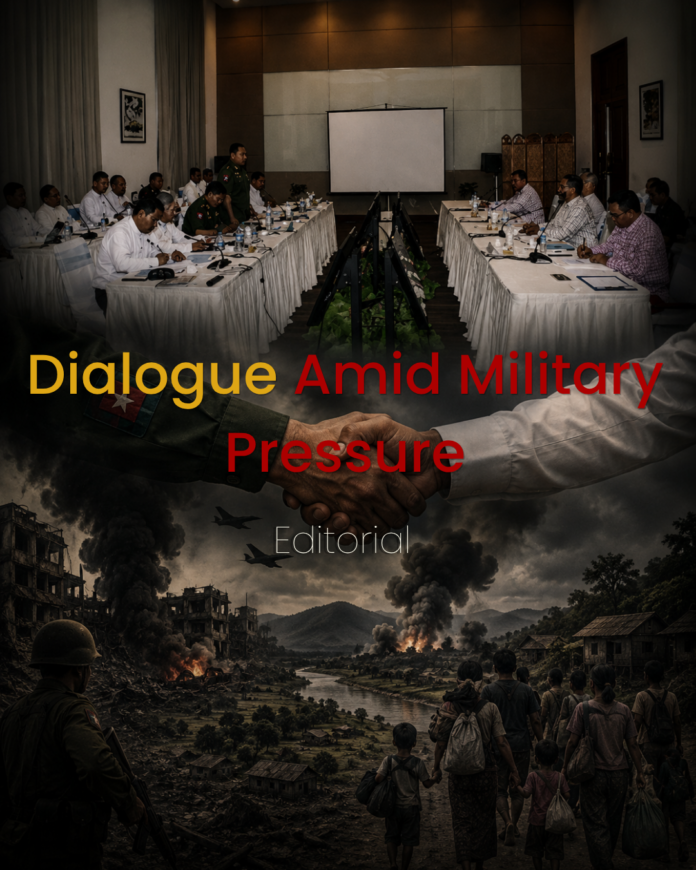
On July 2, a delegation from the New Mon State Party (NMSP), including Vice Chairman Nai Aung Min, Central Executive Committee members Nai Aung Mangay, Nai Banya Chan Non, Central Committee members Nai M Saik Chan and Nai Kon Saik, and Office Chief Nai Zaw Min Oo, met with a delegation from the military regime’s National Solidarity and Peace Negotiation Committee (NSPNC) led by Chairman Lieutenant General Yar Pyae, Secretary Lieutenant General Min Naing, and committee members. The meeting, held at the M Gallery Hotel in Naypyidaw, was conducted under the theme of “peace.”
The latest meeting between the NMSP and the NSPNC raised questions among ethnic political groups but also among democratic forces. In particular, the fact that airstrikes had occurred in the Ye Chaung Phyar area, a territory under NMSP control, before the meeting further intensified questions regarding the purpose and potential outcomes of the dialogue.
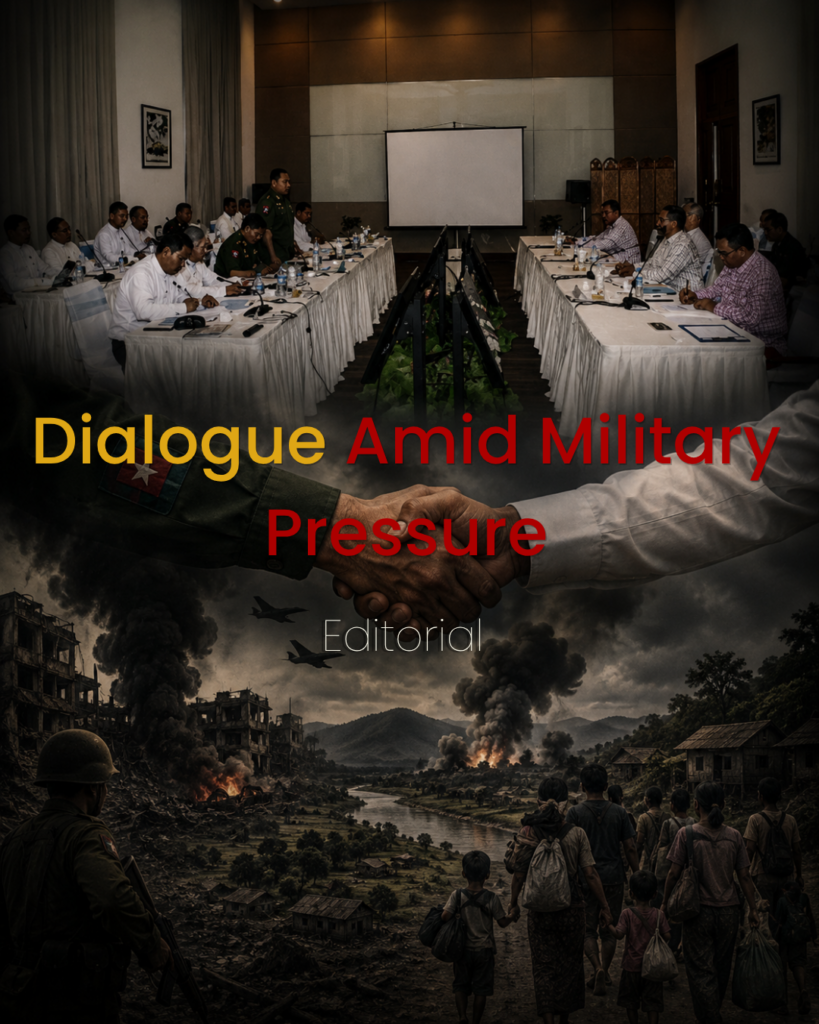
The continued presence of military pressure undermines the fundamental trust required for meaningful negotiations. The NMSP’s decision to engage in dialogue with the military regime amid ongoing military pressure may have been driven by a desire to protect local civilians, reduce military tensions, and keep open a political pathway. However, for such negotiations to be considered credible, there must be visible steps toward reducing military tensions, ending pressure against civilians and relevant stakeholders, and implementing practical measures to rebuild mutual trust.
Instead, if military operations continue, these discussions risk becoming a tool for political legitimacy and image-building rather than a genuine effort toward peace.
Although the NMSP has the right to engage in dialogue with the military regime, the risks cannot be ignored that such negotiations—taking place while military pressure continues and without concrete steps to build trust—could be used to create an appearance of political legitimacy rather than advance genuine peace. True peace negotiations cannot be achieved simply by sitting around a table and engaging in discussions.
Ending airstrikes, military pressure, and arrests that undermine mutual trust is what will give meaning to peace talks.
Otherwise, these meetings may be viewed not as a pathway toward peace, but as a political arrangement being used for strategic purposes.
The military regime’s stated intention to pursue peace within its current 100-day period is not only unrealistic but also lacks genuine commitment. The ongoing civil war in the country is rooted in political issues. Without addressing the fundamental political problems—and with the military regime continuing to prevent meaningful political solutions—the peace that people hope for cannot be achieved.