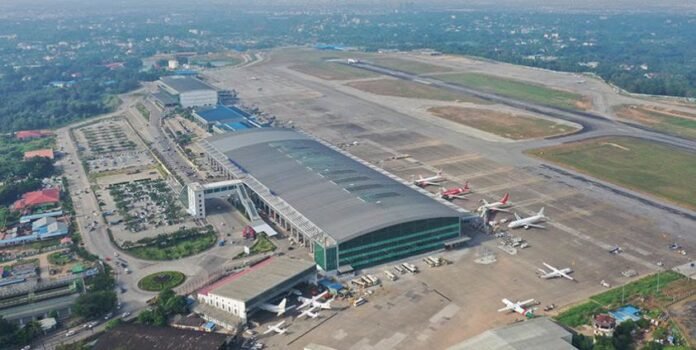
International-standard development projects near Mawlamyine, the capital of Mon State, are continuing to move forward under the leadership of Myanmar’s military junta.
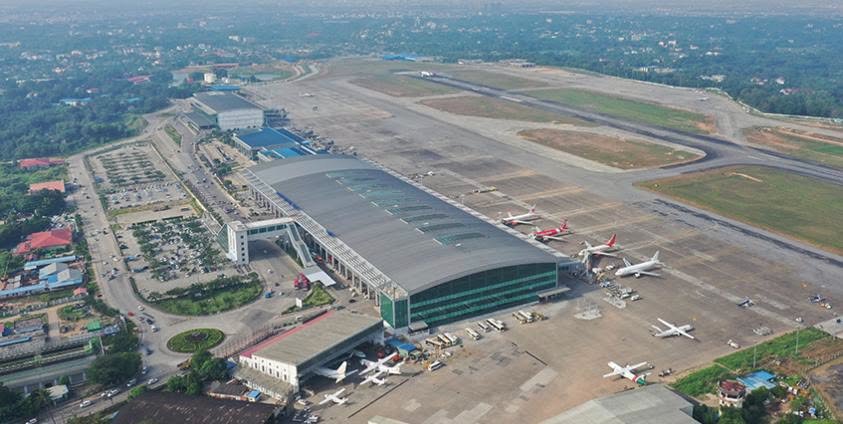
The projects include the construction of a new international airport near Kawparan village in Mudon Township, Mawlamyine District, and an international deep-sea port between Block Nyaung Wine and Wae Ka Li villages.
A member of a Mon civil society organization said that domestic investment alone would not be sufficient to complete these projects and that foreign investment is essential. However, given Myanmar’s current political situation, foreign investors are still taking a wait-and-see approach.
“Whether foreign investment comes will depend largely on how much progress Myanmar makes in its democratic transition and how much confidence investors can have in the country. I believe foreign investors are still observing the situation. They’re watching to see how stable the country becomes, whether democratic reforms advance, and whether the rule of law can be trusted. If there are real improvements in these areas, investment will definitely come,” he said.
The military authorities have stated that these are long-term projects that could take at least five years to complete. Once finished, they are expected to improve the economic prospects not only of Mon State but also Karen State, Tanintharyi Region, and lower Myanmar as a whole.
Geographically, Mon State lies along the East–West Economic Corridor (EWEC), a regional initiative designed to promote economic development and cooperation among five Southeast Asian countries—Myanmar, Thailand, Laos, Cambodia, and Vietnam.
According to Nai Kao La Wi, spokesperson for the Mon Unity Party (MUP), the party has no role in implementing the projects because they are being managed by the relevant authorities.
“During the previous government, issues relating to farmland affected by the projects were already handled by the authorities. As the MUP, we do not have any particular role regarding these projects. The remaining development work falls under the government’s responsibility, so we do not have any specific plans to take action,” he said.
The international airport, deep-sea port, and industrial zone projects together cover approximately 4,695.58 acres.
Farmland and orchards that local farmers had cultivated for many years were designated as project areas after compensation was paid, though residents say the compensation was minimal.
The civil society representative added: “There are already industrial zones in Mawlamyine. During former President Thein Sein’s administration, the Kyauktan industrial complex was also established. These projects were carried out, but they haven’t brought any remarkable transformation. There still aren’t many investors. If we rely only on domestic investment, development will remain limited. That’s why foreign investment is essential.”
If successfully completed, the projects could accelerate the movement of goods, promote tourism, create employment opportunities, and potentially transform not only lower Myanmar but also the wider region into a regional trade hub.
However, analysts caution that Myanmar’s ongoing political instability, armed conflict, and security challenges may make it difficult to implement such large-scale projects smoothly.
Projects costing billions of dollars are unlikely to be financed through the domestic budget alone. Given the current political climate, foreign investors remain hesitant to commit capital.
Myanmar has seen several major infrastructure projects—including the Dawei Deep-Sea Port, Kyaukphyu Deep-Sea Port, the Myitsone Dam, and the Hanthawaddy International Airport—experience suspensions or significant delays due to political instability, security concerns, funding shortages, and disputes over land confiscation.