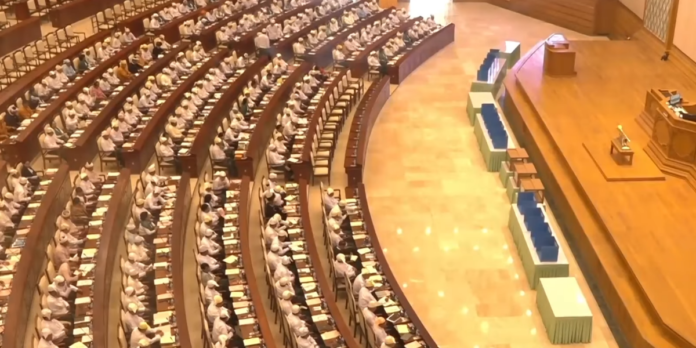
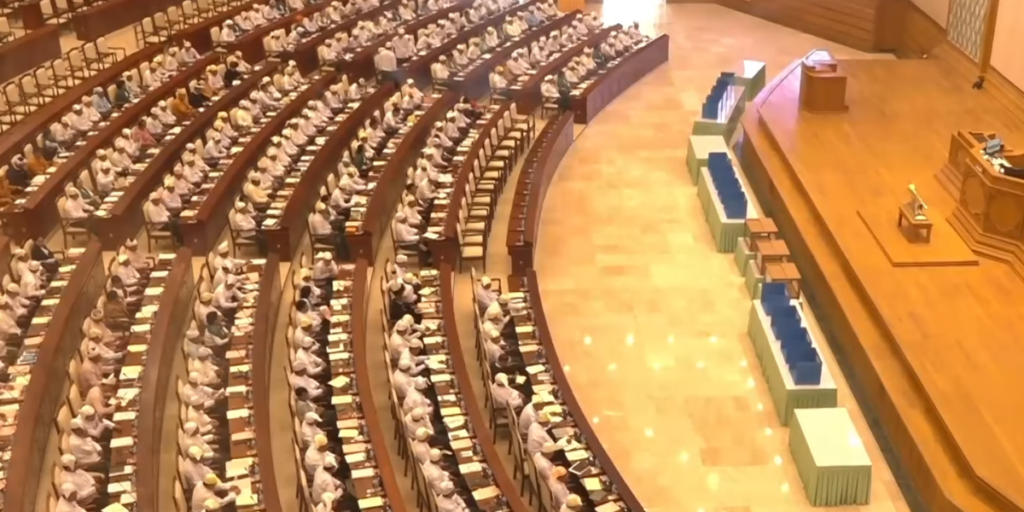
Members of parliament who once said they would seek to resolve Myanmar’s political crisis through party politics and parliamentary debate are now being silenced under the military regime.
According to insider reports, they are living under written pledges that prohibit them from freely expressing their opinions, political beliefs, or criticism of military officials. They are also warned that they could face action if they use language deemed harmful to the junta and authorities or communicate with organizations that have been declared unlawful associations.
In recent days, IMNA contacted and interviewed members of parliament and political party members, and most confirmed that they had signed such pledges.
An official from a major ethnic political party told IMNA, “I had to sign at the election commission. I am not allowed to give interviews.”
Similarly, investigations indicate that U Ko Ko Gyi, Chair of the well-known People’s Party participating in the military-organized election, also signed such an agreement.
Party representatives believe the restrictions are intended to prevent interviews with exile-based media outlets that report on military human rights abuses and the conduct of military officers, as well as to stop internal information from leaking out.
“One of the things happening is that even our phones are being monitored. Please do not call me from an outside number at all,” a female member of parliament told IMNA.
Some members of parliament said they had raised issues with the military government regarding online scam operations, forced military recruitment, and online gambling problems facing the public domestically. However, they said their complaints had produced little effect, and they were reluctant to speak about the issues publicly.
A representative from a major nationwide political party said, “People come to us constantly with complaints now. Someone has been forcibly recruited into the military again; someone else has been scammed by online fraud rings again. The public reports these issues to us, and we submit them to higher authorities. But nothing effective happens. We do not dare criticize them by saying they are failing to act.”
Meanwhile, coup leader Senior General Min Aung Hlaing frequently claims in speeches that his government is governing in line with democratic standards and that people can now speak openly about things they previously feared to discuss.
However, political party members and members of parliament responded that the “democracy” he speaks of exists only in words, while in practice the system depends solely on the orders of a single individual.