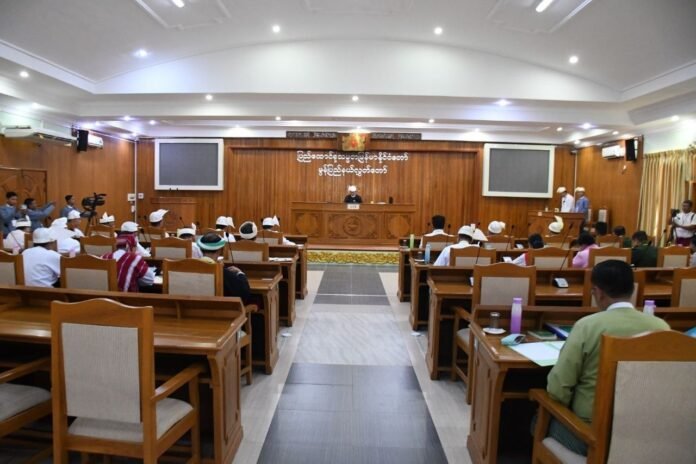
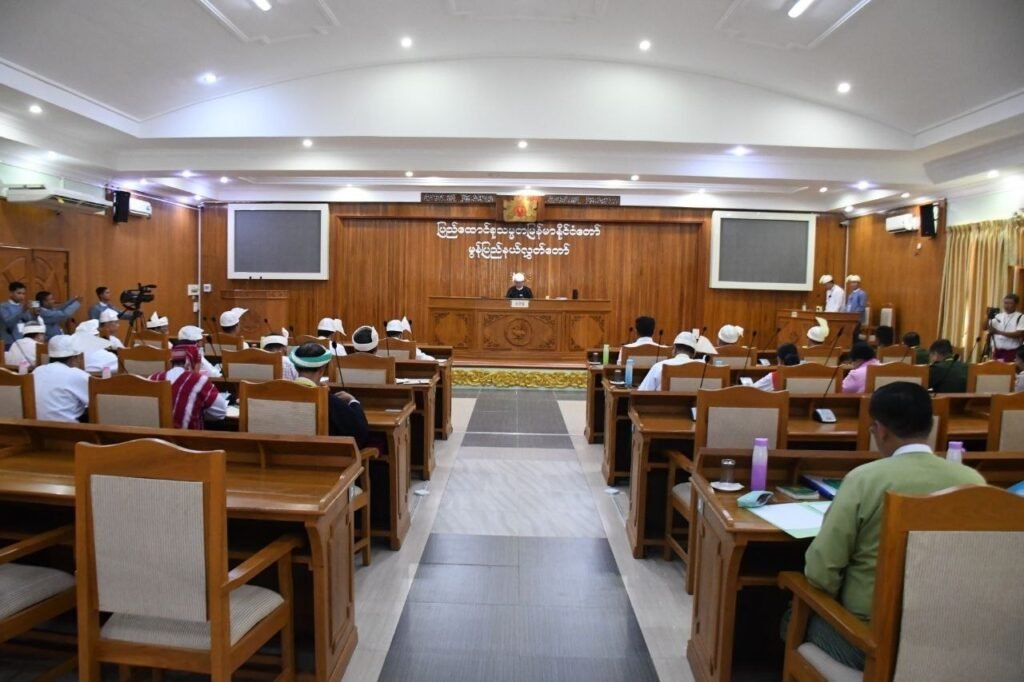
Several elected parliamentary representatives in Mon State recently held meetings with local residents in their constituencies, saying they are attempting to address public concerns through parliament.
The representatives are cooperating with the government’s 100-day projects while also opening constituency offices in their respective townships to directly discuss local needs with residents.
However, local communities continue to face ongoing armed conflict, electricity shortages, restrictions related to gender segregation policies, and other basic social and economic difficulties.
As parliamentary representatives seek greater public legitimacy, Independent Mon News Agency contacted Mon residents from different sectors to ask whether parliament can genuinely resolve contemporary problems arising from military rule.
A woman from a Mon civil society organization said she has not yet seen parliament discussing issues affecting ordinary people.
“We first need to see whether they will actually discuss public issues in parliament. So far, I have not seen anything meaningful. The chief ministers are also appointed by the military. I think this is mainly to strengthen the military junta’s power, not to discuss the people’s needs,” she said.
She also criticized the military junta’s election process and raised concerns about ongoing human rights violations.
“The parliament itself was designed according to the military’s interests. What can this parliament really do for the people? Even now, people are still paying money because of the military service law. If representatives truly want to help the public, they should not wait for people to submit complaints. They already know the country’s needs because they are also part of the public,” she added.
The woman also pointed to worsening economic hardship, rising commodity prices, weak public services, and exploitation faced by migrant workers abroad.
A young Mon man expressed a more positive view, saying it was encouraging that representatives continued meeting residents even after the election period.
“In the past, politicians only met people during election campaigns. Now they are meeting the public after becoming representatives, listening to people’s needs and exchanging views. That is a better approach,” he said.
He added that Mon representatives should focus more on ethnic and cultural issues instead of only infrastructure projects.
“I want them to do more for Mon ethnic affairs, especially Mon language education. Mon teachers should receive salaries instead of only teaching voluntarily. Representatives mainly visit larger villages and safer areas, while less developed areas may still be left behind,” he said.
A person close to the military junta criticized some representatives for lacking qualifications and not engaging closely enough with residents.
“It is not enough to simply open offices. Representatives should travel village by village and directly listen to local problems. They also need to coordinate with government departments to better understand the situation on the ground,” the source said.
A women’s rights activist at the village level said parliament alone could not be relied upon to solve every issue faced by local communities.
“They only ask local groups some questions during field visits. Some parties mainly focus on urban areas and do not visit every village. Farmers continue facing difficulties because fertilizer prices are high,” she said.
She added that some representatives had discussed support for schools, including construction work for Mon national schools and assistance for local business owners through loan programs.
“Still, parliament cannot be fully relied upon. People have already submitted many reports in the past,” she said.