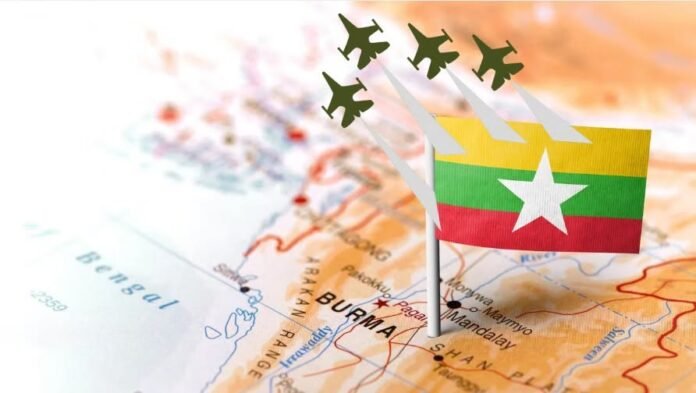
Civilians living in areas with limited communication access across Myanmar continue to face the highest risk of death and injury from airstrikes, according to new data.
The Myanmar Internet Project (MIP) recorded 520 airstrikes nationwide between April and June, killing at least 314 civilians, according to its quarterly report.
About 95% of all deaths occurred in areas where internet access had been cut off. At least 58 women, 41 children, and 15 elderly people were among those killed.
MIP spokesperson Ko Thit Nyan said airstrikes are being used excessively alongside internet shutdowns to serve multiple military objectives, including reasserting territorial control, gaining political legitimacy, and achieving military victory.
“They cut the internet to carry out airstrikes for all these different purposes. That’s why 95% of the deaths happened in areas without internet access. Even our report likely doesn’t capture the full picture,” he said.
At least 22 airstrikes occurred over the past three months in Mon areas, including territory controlled by the New Mon State Party, where phone and internet access remains difficult.
Ko Thit Nyan said the military has increasingly used a tactic of conducting reconnaissance flights during the day and launching strikes at night when people are asleep, causing widespread social harm.
“There’s more physical and psychological harm. People can’t even sleep properly. They can’t work freely or safely. No one knows when or what might happen,” he told IMNA.
He said humanitarian aid is especially difficult to deliver to areas hit by airstrikes because those same areas tend to have disrupted communications.
The report said the airstrikes over the three-month period destroyed 22 religious buildings, seven hospitals and clinics, 17 schools, five displacement camps, and one bridge.
MIP noted that the destruction of hospitals, clinics, and schools has disrupted access to healthcare and education.
About 62% of all recorded airstrikes occurred in Chin, Sagaing, and Rakhine, where fighting between the military junta and armed resistance groups remains intense.