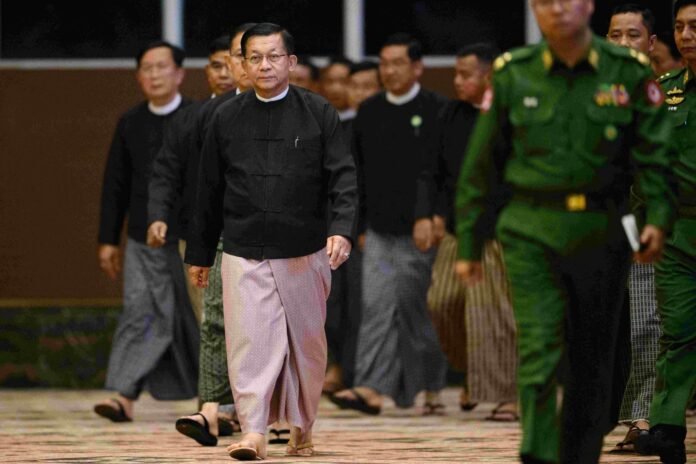
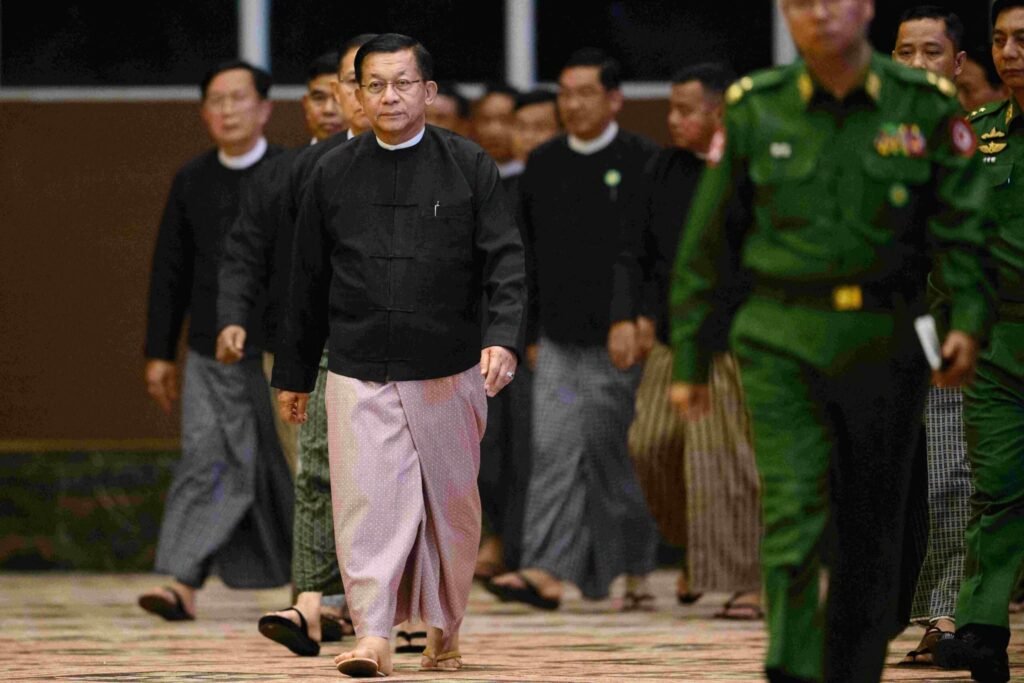
Critics of Myanmar’s military government say the country cannot achieve meaningful peace or development as long as military rule continues, rejecting repeated promises by junta leader Senior General Min Aung Hlaing that his administration will improve the country’s political, economic, and development landscape over the next five years.
The military, which seized power from the elected civilian government in February 2021, has since sought to consolidate its control while presenting itself as a civilian-led administration.
Mi Suta Jo of the Mon State Federal Council (MSFC) argued that the junta’s claims of pursuing economic development are contradicted by its ongoing military operations against civilians.
“People are struggling every day with displacement, hunger, and the destruction of their homes due to airstrikes,” she said. “When the military speaks about development, it is not for the people or the country, but for the interests of its own leadership and their families.”
She added that the military’s continued airstrikes, artillery shelling, and arbitrary arrests have left civilians facing widespread hardship across the country.
According to the Assistance Association for Political Prisoners (AAPP), at least 8,148 pro-democracy activists and civilians had been killed by Myanmar’s military between the February 1, 2021 coup and July 6, 2026.
The AAPP also reported that 31,315 people had been arrested in connection with opposition to the military takeover, with 14,401 remaining in detention.
U Myo Kyaw, spokesperson for the Arakan League for Democracy (ALD), said Myanmar had been on a democratic path before the coup, but the military takeover reversed years of political progress.
“As long as military rule continues, the country’s political advancement and overall development cannot move forward,” he said.
Following heavy battlefield losses and territorial setbacks in clashes with resistance groups, the military introduced mandatory conscription to replenish its ranks. The move has prompted many young people to flee to neighboring countries, raising concerns about the country’s shrinking youth workforce.
Democracy advocates also accuse the military of continuing widespread abuses, including ground offensives against civilian villages, arson, airstrikes, arbitrary arrests, and extrajudicial killings.
The military government has repeatedly maintained that its actions are necessary to restore stability and prepare for future elections, while opposition groups argue that continued military rule remains the primary obstacle to peace, democracy, and national development.