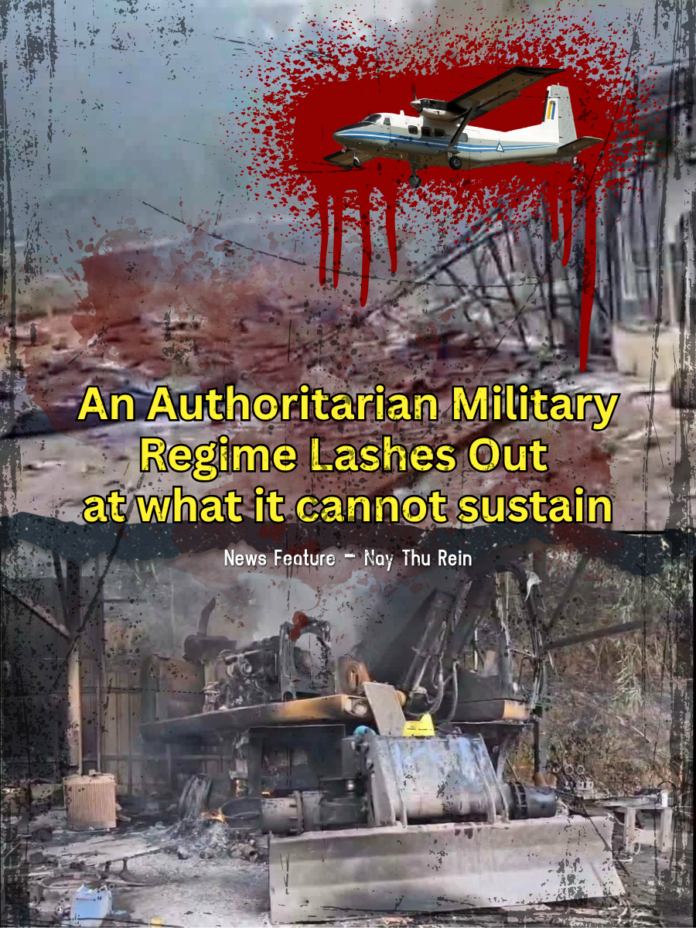
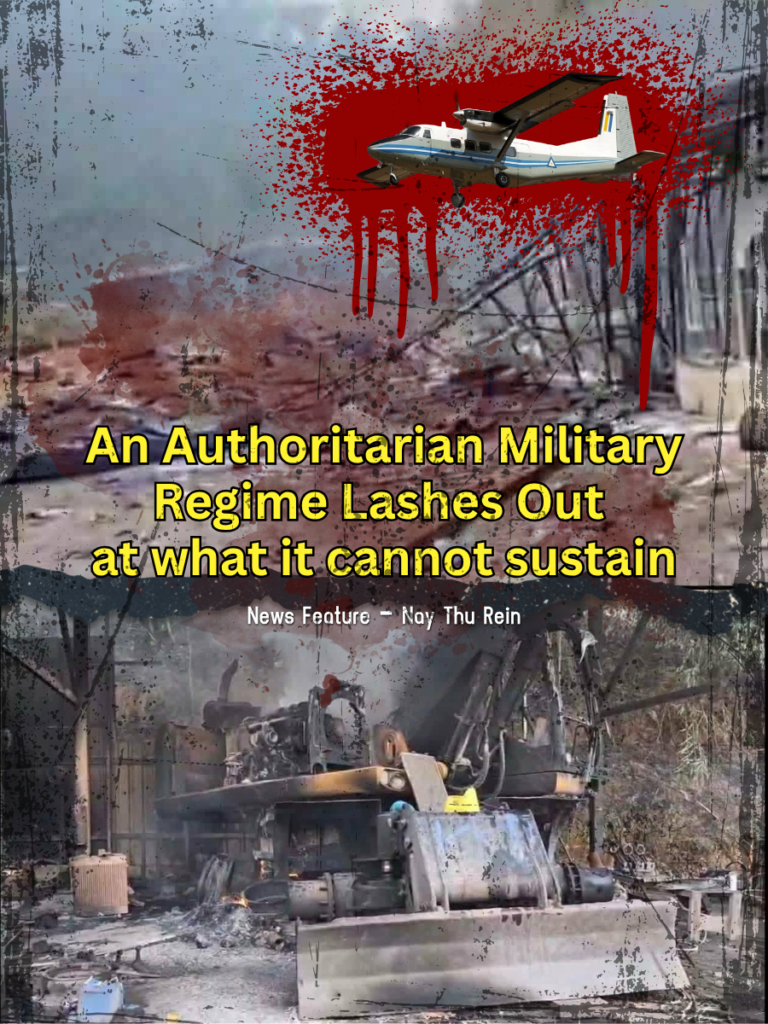
News Feature – Nay Thu Rein
After the Karen National Union (KNU) and the former military regimes of SLORC/SPDC signed a ceasefire agreement, large-scale mining operations began in earnest between the years 1997 and 2000. These were lead and antimony mining operations located between Makkatha village in the KNU-controlled Three Pagodas Pass region and the Thebyu area along the Thai-Myanmar border.
Local businesspeople from the Three Pagodas Pass region partnered with Chinese investors to establish mining companies relying on their substantial financial and labor investments.
Because it was a ceasefire period between the KNU and the military government, business operators applied to the military authorities for official mining licenses. The military regime willingly granted permits in order to collect taxes and registration fees from the companies.
At that time, five companies registered with the government to operate Mines Nos. 1 through 6 between Makkatha and Thebyu. Among them, Nawarat Company, a Thai-Chinese joint venture, was the largest. The company built a mineral refinery on Taung Wine Road in Ward No. 4 of Three Pagodas Pass. However, due to foul odors from the refining process and polluted wastewater, the refinery was eventually shut down.
The primary mineral extracted from the mines between Makkatha and Thebyu was antimony ore. To legalize trade, the ore was transported to mainland Myanmar through the Kyarinnseikyi route, and some was sold through profitable cross-border black markets.
During that period, joint military checkpoints operated by the SPDC and allied forces were stationed throughout the mining region.
Since it was a ceasefire era, there were few major problems, and both the KNU and the joint military forces collected taxes on minerals transported through the area. At the time, the mines employed an estimated 3,000 to 5,000 workers. Shops and roadside businesses flourished along the route to the mines.
The mining areas, beginning with Mines Nos. 1 through 6 in Makkatha village—located about five kilometers from Three Pagodas Pass town—stretched all the way to Thebyu mine. Reaching the farthest mining sites required nearly half a day of travel by car or motorcycle over rough roads spanning 90 kilometers.
Because KNU checkpoints and military checkpoints were positioned along the route, nighttime travel beyond designated hours was prohibited.
As mining operations expanded, Chinese businessmen began purchasing local villagers’ plantations and vacant land located above mineral veins at extremely high prices. Local residents benefited from these land sales.
However, the lives of miners and market vendors who had once worked in relative peace changed dramatically after the military coup of 2021.
Frequent clashes broke out between the KNU and junta-aligned forces in the mining region, while the military increasingly carried out aerial bombings. As a result, mine workers and civilians were injured and killed, forcing several mines to suspend or completely halt operations.
Because of the mine closures, minerals could no longer be legally transported into the country, and the junta lost significant tax revenue.
Although many mines shut down, some Chinese businessmen—driven by profit—negotiated directly with the KNU and quietly resumed operations at certain sites. In these cases, tax revenues from the mines flowed solely to the KNU.
Aware of this situation, the military junta repeatedly bombed the mining areas from the air. The junta launched three bombing attacks in 2024 and two more in 2025. Civilians were reportedly injured and killed in these attacks.
Yet despite the repeated bombings, none were said to be as severe as the airstrike carried out on April 29, 2026, which caused particularly heavy destruction and casualties.
According to miners in the area, from around 2 p.m. to approximately 6 p.m. on April 29, 2026, Y-12 aircraft operated by the junta dropped roughly 80 fifty-pound bombs in at least six separate bombing runs targeting Mines Nos. 1 through 6 outside Makkatha village.
Thousands of workers and civilians across the mining region fled for safety. Mine workers said there were both injuries and deaths.
They also stressed that no active fighting was taking place at the time of the attack. Bombing mining sites, workers, and civilians in such a deliberate manner, they argued, reflected the military council’s cruelty, self-interest, and disregard for human life.
Since the 2021 coup, many mining companies have shut down, although some businessmen have reportedly continued operating certain mines through arrangements with the KNU. The junta, unable to collect taxes from the mining industry while the KNU benefited exclusively, allegedly responded by repeatedly bombing the mining regions throughout 2024, 2025, and again in 2026.
“One thing I believe,” said one mine worker, “is that the military junta is jealous because it cannot receive tax revenue from these mines while only the KNU benefits. That’s why they are trying to destroy everything.”
“They bombed the area many times in previous years as well. Last year, they even bombed Makkatha village simply because they suspected KNU members might be there. Villagers were injured, and the monastery was damaged. The junta’s actions harmed civilians rather than their enemies. Now they’ve bombed the entire mining area again. Civilians and workers have been injured and killed. People have lost both their jobs and livelihoods.”
Following the junta’s latest large-scale bombing attack, which caused extensive casualties and destruction, the KNU ordered all mining operations in the region to suspend activities for three months due to security concerns, according to mine workers.
The brutal actions carried out by the military junta on April 29—devoid of shame, fear, or concern for human life—were described by locals as the embodiment of the Burmese saying: “If I cannot have it, no one else should,” and likened the bombings d