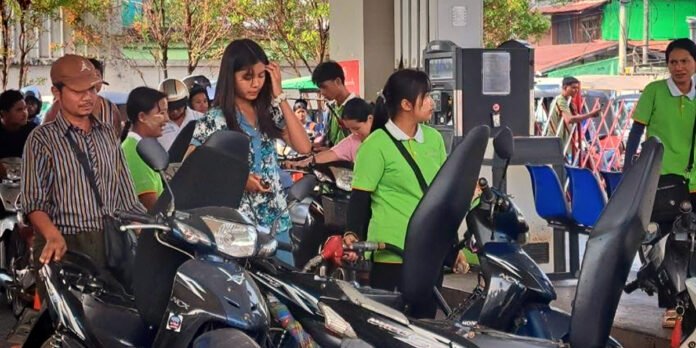
Most vehicle users in Mon State still do not understand the military commission’s “odd–even” vehicle restriction system, according to interviews conducted by the Independent Mon News Agency (IMNA). Although the period from March 7th to March 13th was designated for public awareness, residents said no effective explanation or public information campaign has been carried out.
The military commission introduced the odd–even system in Mon State to reduce fuel consumption. The system requires vehicle license plates that end with an odd number to travel on alternating days. Likewise, vehicles with plates ending with an even number would be able to drive on the alternate day. Authorities said enforcement will begin on March 14th, when joint inspection teams will start arresting violators. The penalty is set at one month in prison and a fine of 20,000 kyats.
According to the current system used by fuel stations in Mawlamyine, gasoline is sold based on the last digit of a vehicle’s license plate number, allowing refueling only on the corresponding odd or even day.
However, traffic police under the military commission are interpreting the rule based on the first digit of the license plate number. As a result, drivers are confused, and residents from different sectors told IMNA the system has created difficulties for their businesses and daily travel.
A woman working in the transportation sector said the policy has already affected their operations.
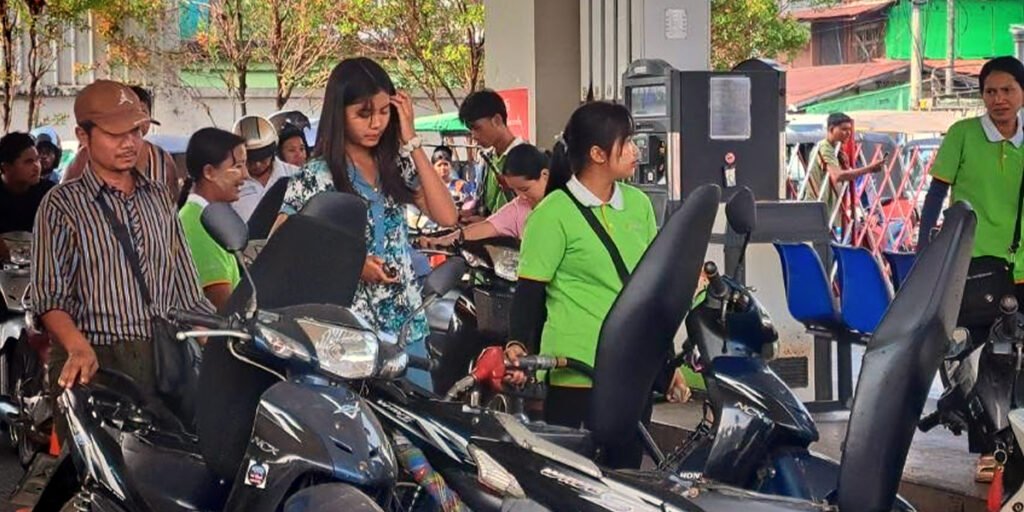
“Right now it is still the awareness period, so we have not heard about arrests yet. They said enforcement will start on the 14th. The punishment will be one month in prison and a fine. They also refuse to sell gasoline to drivers if it is not their day to drive. Because of the odd–even system, our business faces many difficulties. We cannot accept people who want to rent vehicles for pilgrimage trips. At the moment, both odd and even vehicles travel together, but we refuel the allowed vehicle and then transfer the fuel for the other one. This delays our work, and we cannot make same-day trips anymore,” she said.
A resident from Paung Township who is close to local administrative officials said many residents still do not understand the rule because authorities have not clearly explained the system.
“Most local people do not understand these rules. There has been no effective public awareness effort. Some residents went to ask at the immigration office, but officials said they had not yet received instructions and did not know the details. Even now, as enforcement is approaching, many people are still confused,” he said.
A female office worker in Mawlamyine said the lack of clear instructions has created problems for employees who must travel to work daily.
“Some people say we must check the first digit of the plate number, while others say we must check the last digit. We do not know which one to follow. For those of us who must go to work every day, it creates difficulties. If our motorcycle has an even number, it is hard to travel on odd days. Hiring another vehicle every other day is also not practical because salaries are already low,” she said.
An areca nut trader from Ye Township said the fuel restriction and travel limitations are affecting his livelihood.
“As a trader, I usually transport goods using my own vehicle. Now gasoline is sold only on alternating days, and each vehicle can buy only 30,000 kyats worth of fuel. That is not enough for our trips. If I travel today and run out of fuel, I cannot refill until the next day, so the work stops and everything gets delayed,” he said.
Residents said the restrictions on both fuel sales and vehicle movement have made it increasingly difficult for many people who rely on daily travel for their livelihoods.