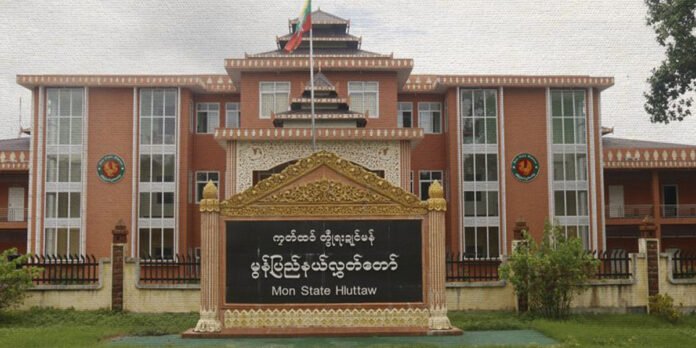
In the election organized by the military commission, Mon State participated in two phases. Phase (1), held on December 28, included Kyaikto, Thaton, Mawlamyine, Chaungzon, and Kyaikmaraw townships. Phase (2), held on January 11, included Bilin, Paung, Mudon, Thanbyuzayat, and Ye townships.
Out of 45 constituencies in Mon State, results from both phases show that the military-backed Union Solidarity and Development Party (USDP), led by former generals, won 21 seats. The Mon Unity Party secured the second-highest number of seats, winning 17 constituencies.
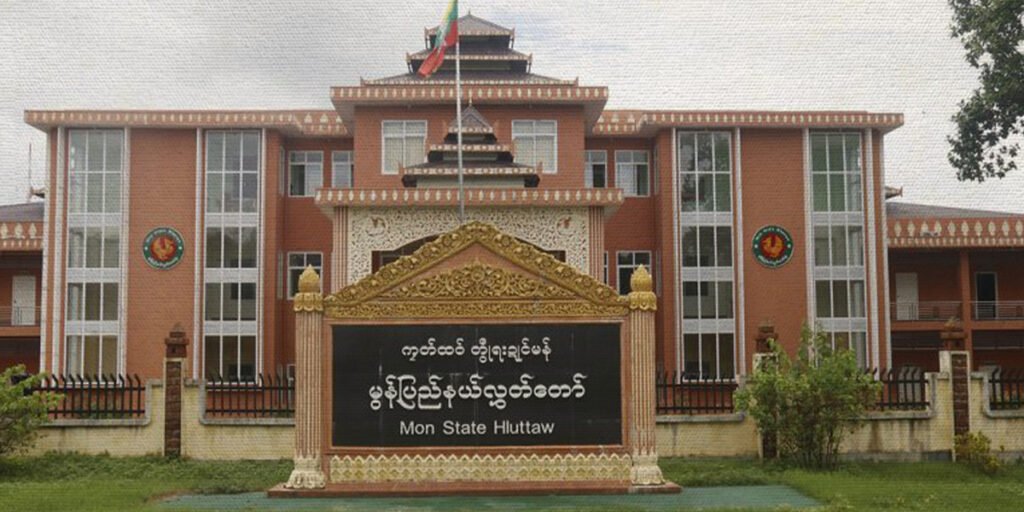
In the 31-seat Mon State Hluttaw (State Parliament), the USDP holds 11 seats, while 8 seats are allocated to Tatmadaw (military) representatives. The Mon Unity Party has secured 7 seats. One seat each is held by the Ethnic Unity Party, the Pa-O National Development Party, the People’s Party, the People’s Pioneer Party, and the National Development Party.
The eight military-appointed representatives in the Mon State Hluttaw are Brigadier General Aung Win Than; Colonel Kyaw Swar Myint, the current Minister for Security and Border Affairs in Mon State; Colonel Maung Maung Latt; Major Nyi Bo Bo Soe; Major Daw Ngu War Kyi; Major Daw Thet Thet Soe; Captain Daw Myint Myint Nwe; and Captain Daw Thuzar. Among the eight appointed military representatives, one holds the rank of Brigadier General, indicating the senior level of military involvement.
In a familiar pattern of power retention, military leaders and the USDP leadership reportedly convened in February to orchestrate power-sharing for the new government. Predictably, the military has commandeered several pivotal posts. As an extension of this maneuver, Brigadier General Aung Win Than is now expected to assume the role of Chief Minister of Mon State—the most influential position in the state government.
As widely anticipated, the so-called “sham election” plainly served to entrench the Myanmar/Bamar military’s supremacy. Mon State’s new political arrangement makes this intent unmistakable. The same charade is poised to unfold across other states and regions, cementing military rule under a thin veneer of civilian administration. By brazenly consolidating power and systematically excluding ethnic political forces and democratic groups, the military is deepening division and fueling ongoing conflict—sabotaging any hope for genuine peace or meaningful development for the people.