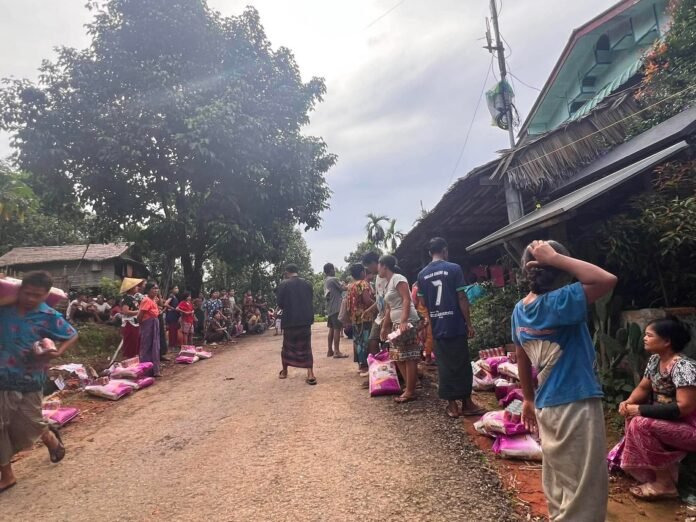
Nearly all residents of Kamun Village in Yechaunghpyar area, Ye Township, remain displaced after recent military junta airstrikes, according to a local resident interviewed by the Independent Mon News Agency (IMNA).
The military junta carried out a series of aerial bombardments in the Yechaunghpyar area in early June. Although aerial surveillance flights have recently decreased, many residents continue to monitor the security situation closely and remain hesitant to return home permanently.
In an interview with IMNA, a Yechaunghpyar resident discussed the current situation of displaced villagers and the challenges they continue to face.
Question: What is the current situation regarding military junta surveillance flights in the Yechaunghpyar area?
Answer: Surveillance flights have become less frequent in recent days. As a result, many local residents have started returning to their villages. However, people are still closely watching the situation. They keep clothes and food prepared so they can evacuate immediately if they hear aircraft approaching.
Question: Which villages still have residents who remain displaced?
Answer: At the moment, most residents from Chae Taik, Kyauktine, Manipura, and Chaungnakwa villages have already returned home. However, residents of Kamun Village, which was directly affected by the airstrikes, are still reluctant to return completely. Some people come back to the village during the day but leave again at night to stay in safer locations.
Question: Approximately how many displaced people have not yet been able to return home?
Answer: It would be fair to say that almost the entire population of Kamun Village remains displaced. The village has more than 70 households, and the population is likely in the hundreds. However, there is no exact figure available yet.
Question: What is the current living situation for displaced people?
Answer: Many have taken shelter in villages within New Mon State Party-controlled areas, including Phalan Chaungwa, Chae Taik, and Halockhani. Those with relatives stay at relatives’ homes, while others live in monasteries or vacant huts in plantations. To support themselves, many work as daily laborers clearing plantations or cutting grass during the daytime.
Question: Has the New Mon State Party provided assistance to displaced people? What other forms of support are available?
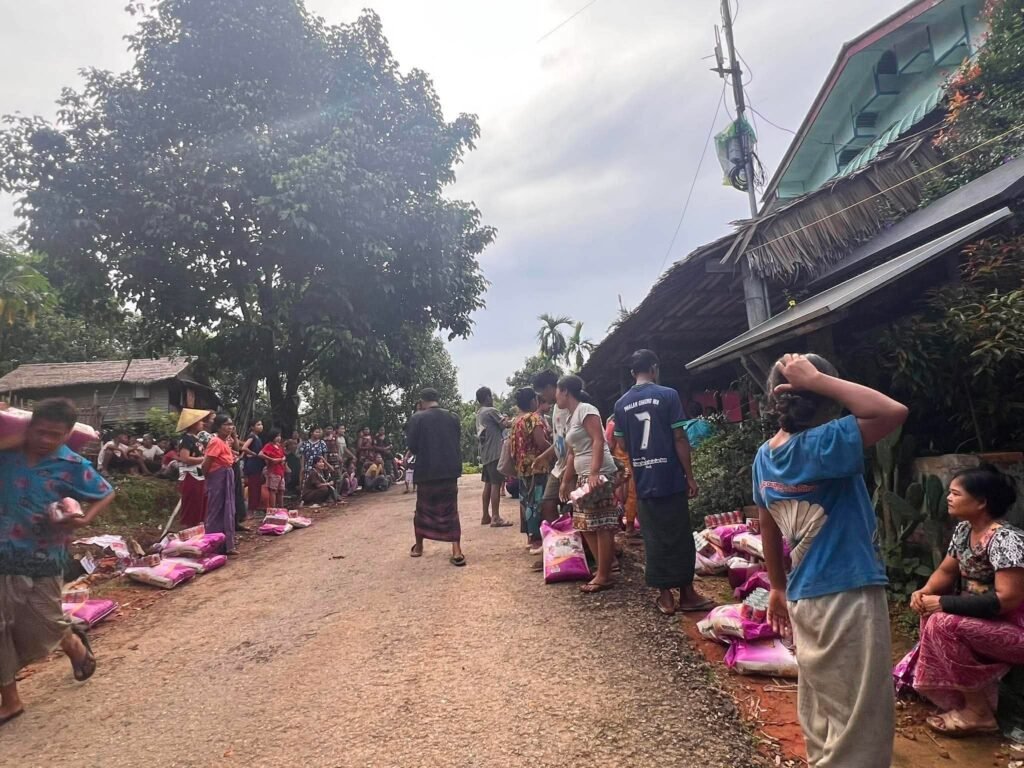
Answer: I have not seen the New Mon State Party directly providing assistance to displaced people. However, it may be cooperating with other donors and aid groups. I have heard that relief organizations have provided up to 1.2 million kyat per household in some cases, although I do not know whether everyone has received assistance. Most displaced people have received rice and some food supplies.
Question: What are the biggest challenges currently facing displaced people?
Answer: The main difficulties are food and shelter. Many people still do not feel safe returning to their homes and must rely on staying with others, which creates many inconveniences. Most have no regular employment and struggle to earn income. Only a small number of men can find daily labor jobs such as cutting grass or clearing plantations. As long as people cannot return home, livelihood challenges will continue.
The interview highlights the ongoing humanitarian difficulties facing residents displaced by recent military junta airstrikes in the Yechaunghpyar area, despite a temporary reduction in aerial military activity.