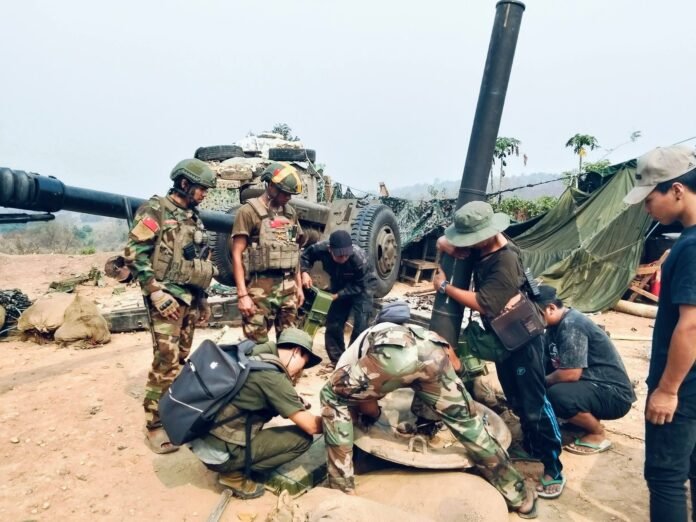
Towns previously captured by revolutionary forces are currently being retaken by the military regime.
On April 25, 2026, the military regained control of Falam Town in Chin State, which had been seized on April 9, 2025 by the Chin Brotherhood forces and allied groups.
Similarly, Indaw Town in northern Sagaing Region—previously under the control of revolutionary forces—was retaken by the military on April 30, 2026.
According to CDM Captain Zin Yaw, a military affairs analyst, the primary reason revolutionary forces are withdrawing from captured towns is due to shortages of weapons and ammunition.
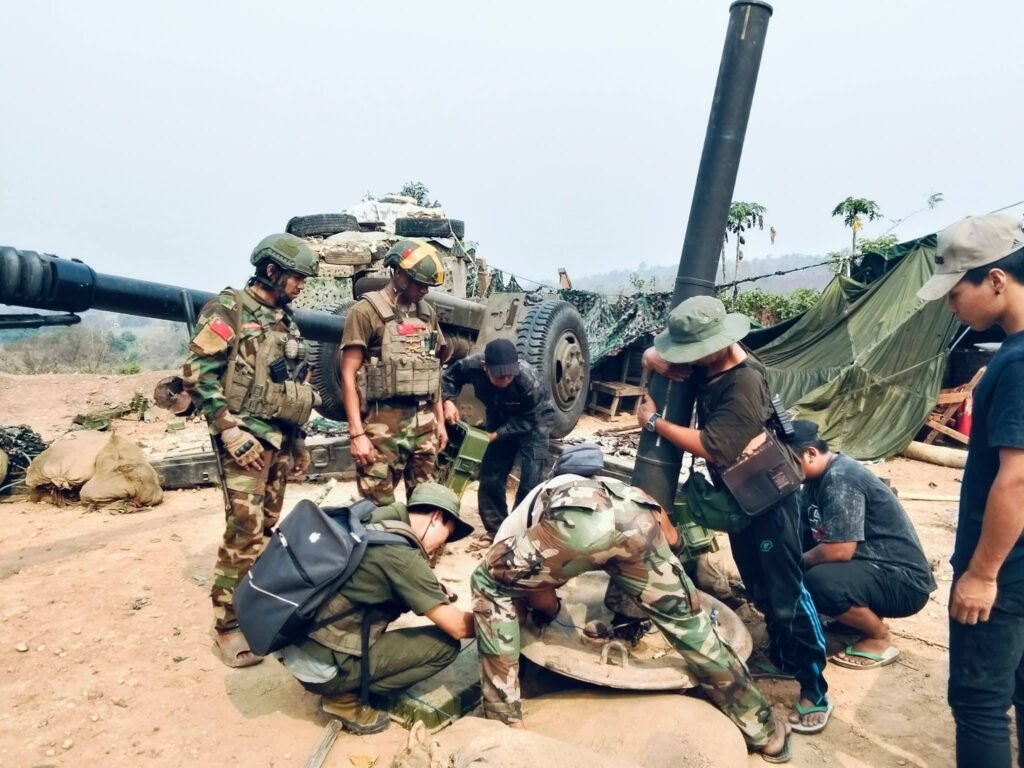
“The military appears to have a clear understanding of the ammunition situation of revolutionary forces through proper surveillance. In the case of Indaw, for example, it took them about nine to ten days to advance from Katha. But after reaching Nabha junction, there was no major fighting, and revolutionary forces withdrew. Even in terms of air support, in Indaw, it was only on the day of entry that there was one intense strike. The military uses firepower and its superior numbers. Since revolutionary forces are aware of their ammunition limitations, they withdraw without heavy fighting. In both cases, it ultimately comes down to ammunition.”
He also stated that approximately 75% of weapons and ammunition used in the current Spring Revolution depend on ethnic armed organizations with links to China, and that restrictions or cuts in supply from these groups have had a significant impact.
During Operation 1027, conducted by the Three Brotherhood Alliance (AA-MNDAA-TNLA), many towns in northern Shan State were successfully captured and controlled. However, due to Chinese mediation and pressure on ethnic armed organizations, some towns—including Lashio, Kyaukme, and Hsipaw—were later returned to military control.
According to Khun Wai Htoo, Secretary of the Pa-O National Federal Council (PNFC), the ceasefire between ethnic armed organizations and the military in northern Shan State allowed the army to launch large-scale offensives in other regions.
“It is assessed that northern Shan EROs made a political compromise following China’s instructions and agreed to a ceasefire. Because of this ceasefire with the military council, the line of control in northern Shan collapsed. As a result, the military was able to launch offensives in central regions such as Sagaing, Mandalay, and Magway by cutting through those lines. Therefore, the revolutionary side had no choice but to retreat, and this is the main reason they lost control of previously captured towns and territories.”
Currently, after retaking Indaw Town, the military is reportedly preparing to launch an offensive on nearby Mowlu Town, which is also under revolutionary control.
Meanwhile, in Rakhine State, the Arakan Army (AA) controls 14 out of 17 townships as well as the Paletwa area in Chin State. Fighting continues with the military over remaining towns including Sittwe, Kyaukphyu, and Manaung.
Political analysts note that the main reason for the loss of territories held by revolutionary forces is the shortage of weapons and ammunition. They also emphasize the need to secure ammunition supplies and to conduct operations targeting military weapons depots and supply storage sites.