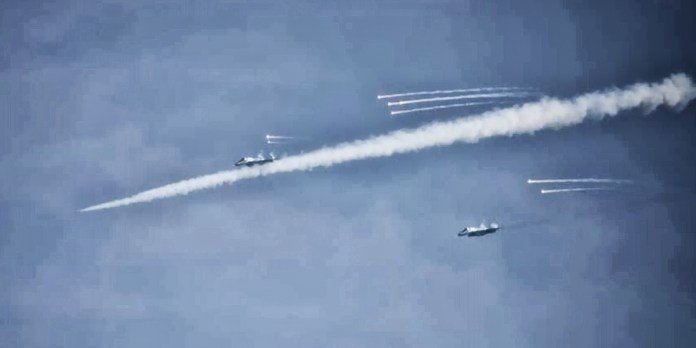
Due to ongoing conflicts in the central and eastern regions, Myanmar is facing a severe fuel shortage. While the public struggles with a lack of gasoline, the military continues to carry out daily airstrikes.
Even as fuel is being sold in limited quantities on the domestic market and civilians queue up to buy at inflated prices, the military continues to purchase and consume Jet AA 1 aviation fuel using state funds without interruption.
In some areas, fuel supplies have almost completely run out, forcing people to buy whatever is available, no matter the price.
A volunteer helping displaced people in the western part of Dimowso Township, Karenni State, said, “Lately, we can’t even get fuel, so we can’t deliver water to the displacement camps anymore.”
IMNA has confirmed that the military has carried out airstrikes in villages across Karenni, Rakhine, Kachin, Karen, Bago, Magway, and Sagaing regions.
On March 5th, five women were killed when the military conducted an airstrike on IEC No. 2 detention camp of the Karenni State Interim Administration Council.
Villages in Kawkareik, Hpa-an, and Pyin Oo Lwin townships were also targeted by airstrikes, resulting in civilian deaths.
Ko Aung Gyi, a volunteer assisting displaced people in Pyin Oo Lwin Township, Sagaing Region, said: “Even though fuel prices here were high before, now even those with money cannot buy much. But the violent military can use state funds—they can buy as much as they want. China also supplies them when needed. That’s why the airstrikes continue. For ordinary people, we need to be more careful. Bombs are falling, there are landmines, and fuel is so scarce that some can’t even flee on motorcycles. This is the situation we face.”
In early March, Russian-owned IL-76 cargo planes reportedly landed in Naypyidaw twice, and some maritime shipments also took place, according to CDM military sources.
A CDM Air Force official said: “Even when aviation fuel cannot be imported from abroad, the military has been processing it directly at refineries in Mandalay, like the Mann Thanpayarkan oil refinery, for a long time—since before the coup. The main route through Singapore is blocked, so they rely heavily on Russia for fuel. Some fuel still comes by sea, but mostly air transport is being used.”
According to Major General Zaw Min Htun, a spokesperson for the military commission, Myanmar currently has about 40 days’ worth of emergency fuel supplies, and more fuel shipments are expected to arrive.
Civilians in areas near conflict zones face not only severe fuel shortages due to military blockades but also increasing difficulty avoiding military attacks.