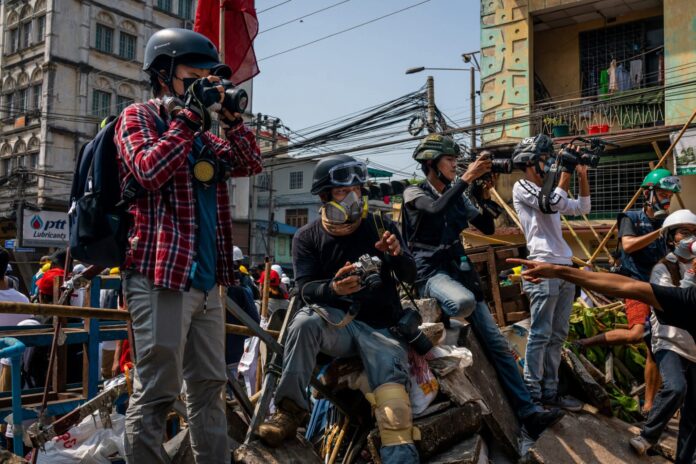
The Independent Press Council Myanmar (IPCM) issued a statement on January 19 calling for an immediate end to the targeted arrest, torture, and imprisonment of journalists in Myanmar.
IPCM held its second General Assembly online over two days, January 17 and 18. Through the assembly, delegates adopted and issued five advocacy demands related to Myanmar’s media sector.
According to IPCM Secretary U Toe Zaw Latt, the current period represents the worst situation yet for journalists in terms of arrests, repression, and imprisonment. Speaking to IMNA, he said that after China, Myanmar now ranks second globally in the number of journalists detained and imprisoned.
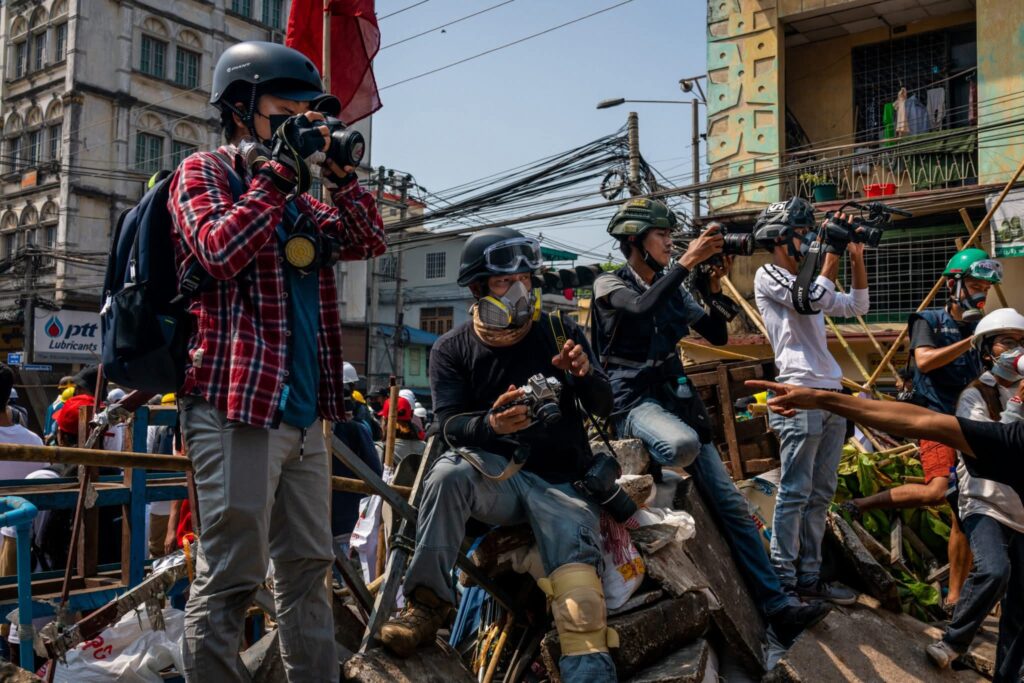
“Restrictions on press freedom under the military are nothing new,” he said. “But even in liberated areas and territories administered by resistance forces, journalists are facing many challenges regarding access to information. At present, in many of Myanmar’s 92 townships, access to information is not easy at all.”
He added that in resistance-controlled areas, IPCM has been able to negotiate with relevant stakeholders and reach multiple agreements to ensure journalists’ access to information and safety. At the same time, IPCM is making every effort to advocate within international communities that journalistic work—especially the right to gather news—should not be treated as a criminal offense, particularly for journalists struggling under military administration.
An IPCM official also warned that journalists’ access to information and security could further deteriorate during and after the election period, emphasizing the need for collective efforts to overcome these challenges.
During the two-day assembly, IPCM members elected 14 Executive Committee members consisting of nine representatives from news organizations, three freelance journalists, and two media experts.
Founded in 2023, IPCM primarily works on issues related to media freedom and ethics in Myanmar. The council has also approved policies to prevent sexual harassment in the workplace and has formally recognized ethnic-language media outlets.