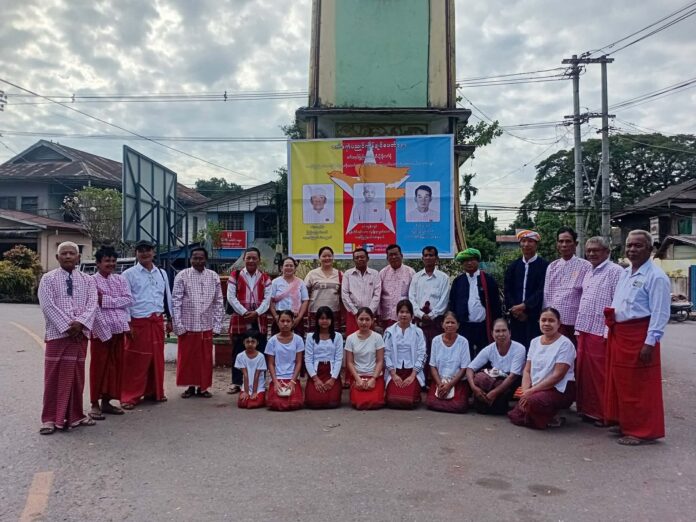
In the election organized under the leadership of the military commission, the Mon Development Party—representing the Mon Unity Party in Karen State—failed to achieve strong results in the first phase due to limited funding, insufficient human resources, and unstable security conditions. A party official told IMNA that these challenges prevented the party from fully carrying out election campaigning and effective polling station monitoring.
In the first phase of the election, the Mon Development Party contested a total of three candidates in Hpa-an Township and Kawkareik Township in Karen State. However, with only around 20 percent of voters supporting the party, none of its candidates won.
Based on the results of the first phase, IMNA interviewed a party official to assess the outcome and discuss the party’s plans for the upcoming phases of the election.
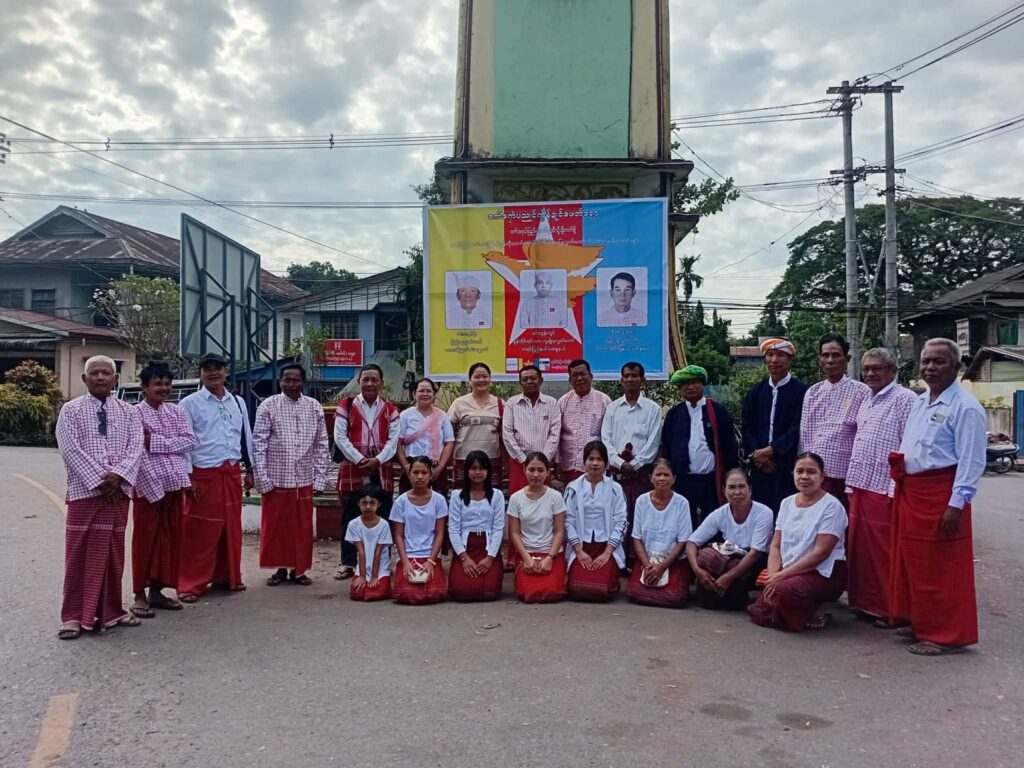
Q: In the first phase of the 2025 election organized by the military commission, how many seats did the Mon Development Party contest, and could you briefly explain the results?
A: In the first phase of the election, our Mon Development Party fielded one candidate for the Amyotha Hluttaw seat and one candidate for the Ethnic Affairs seat in Hpa-an Township, Karen State. We also fielded one Amyotha Hluttaw candidate in Kawkareik Township, making a total of three candidates. However, none of them won in the first phase of the 2025 election. The only relatively positive result came from one Ethnic Affairs candidate, who placed second. All other seats were won decisively by the Union Solidarity and Development Party (USDP).
Q: How does the party assess the low voter turnout in the first phase? Do you think public trust in the election has declined?
A: In Phase One, voter support for our Mon Development Party was low. The Development Party has a fairly strong voter base of its own supporters. Our supporters, however, turned out in smaller numbers. Some were not in their villages, while others were present but not included on the voter lists. Overall, public voter turnout was low. When calculated overall, only about 20 percent of the votes were cast in our favor.
Q: What were the main challenges faced by the Mon Development Party in the first phase of the election?
A: We faced many difficulties. Since our party is new, we have limited funds. We could not station our people at every polling station and were only able to place a small number. We lack sufficient polling station monitors, vote counters, communication staff, informants, and campaigners. At each polling station, we could place only about five people. We were also unable to conduct effective grassroots campaigning.
In this first phase, in Hpa-an Township, we could only operate in areas such as Khaya and Thanlwe villages. In Kawkareik, we could campaign only in the town area and around Kyondoe. In Mon-majority areas such as Kawbein, Kamani, Kawkyaik, and Kawgo villages, elections could not be held due to unstable security conditions. As a result, we faced serious difficulties.
Most importantly, many people were unable to vote. In both Kyar Inn Seik Gyi and Kawkareik, elections could not be conducted in the most Mon-populated areas. In places where we strongly believed we would receive support, elections could not be held. Therefore, the party did not receive as many votes as we had hoped.
Q: What preparations has the Mon Development Party made for Phase Two and Phase Three of the upcoming elections?
A: In Phase Two, our party plans to contest in Hlaingbwe Township, focusing only on one Ethnic Affairs seat. In Phase Three, we plan to compete in Kawkareik and Kyar Inn Seik Gyi. In Kawkareik, we will field one Amyotha Hluttaw candidate and one Ethnic Affairs candidate. However, due to security concerns in some areas, we may not be able to campaign fully. In the next phases of the election, we plan to mobilize and encourage young people while continuing to compete.
Q: What role does the party hope to play in the military commission’s parliament through the election, and how does the party plan to address the conflicts currently faced by the Mon people?
A: We hope to secure a position in the Ethnic Affairs section of parliament. Beyond that, we do not have further expectations. Our voter base is weak, and we lack a strong core support base, so we are contesting mainly for the survival of the party.
In reality, if elections were held everywhere and everyone was able to vote, we could potentially win around five seats in Karen State. There are up to 200,000 eligible voters. For example, the Palaung and Pa-O communities have only around 70,000 people in total. In contrast, there are about 300,000 Mon people living in Karen State, and more than 190,000 of them are included on the voter lists.
If calculated based on voter turnout percentages, we could secure up to five seats in Karen State. This would allow more Mon representatives to be present in government and enable us to continue working for the Mon people while remaining engaged in the political process.