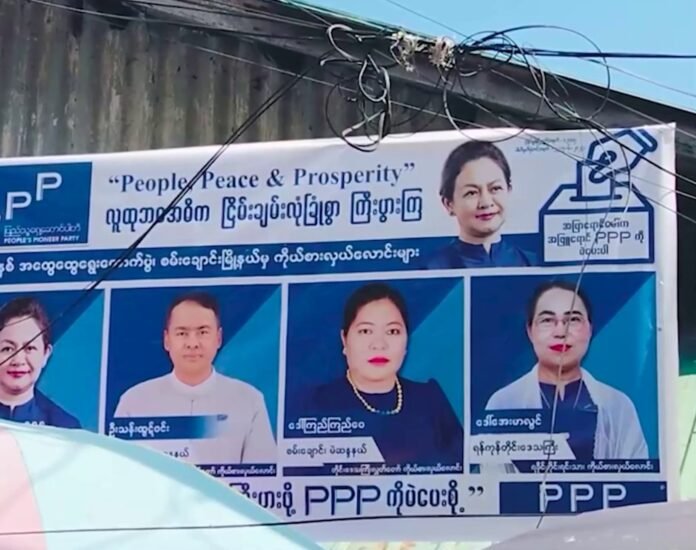
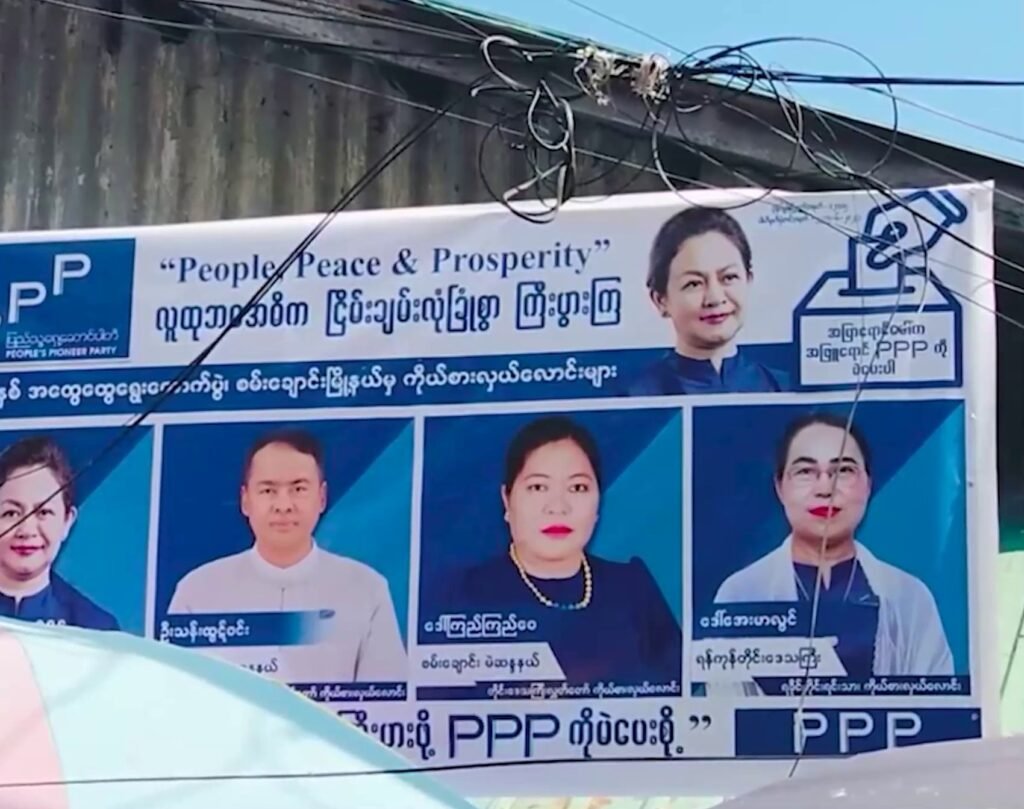
The number of women registering as parliamentary candidates in the upcoming election organized by the military regime is higher than in previous elections.
Across all parliamentary bodies, 309 women are registered candidates for the House of Representatives (Pyithu Hluttaw), 190 women candidates for the House of Nationalities (Amyotha Hluttaw), and as many as 704 women candidates for the Region or State Hluttaw.
Among those who filed applications, 1,183 women have been officially approved as candidates, according to the Union Election Commission (UEC) which was formed by the military regime.
Daw Sanda Min, an independent candidate for the Pyithu Hluttaw, said that due to the current nationwide crisis and the suffering people are experiencing, women have become more politically active. She added that many women believe their participation will result in more effective leadership.
“In the past—up until 2015—Myanmar’s political situation wasn’t as bad as it is after 2020. So women prioritized family responsibilities and gave way to men. In many families, husbands would run and wives would support them from behind. But now, women, men, and even children are suffering together. That’s why women’s political spirit has grown. They now believe that if they act, they may be able to make a stronger impact,” she said.
She added that women’s increased participation is also inspired by the emergence of female political leaders—beginning with Daw Aung San Suu Kyi—and later female chief ministers, giving women role models and a sense of pride.
In the 2015 general election, 799 women contested as candidates, while 908 women contested in the 2020 general election.
However, according to Mi Suta Jo of the Mon State Federal Council (MSFC), the rise in women’s participation in the military-organized election is also driven by economic incentives and the regime’s intention to use women for political purposes.
“For this election, the first reason is personal benefit, especially economic. When opportunities and incentives are offered, people are drawn in. And there’s also pressure. Many women do not have political experience. Traditionally, women were excluded from politics under the patriarchal system. So women were not politically engaged. Because of this, they are now being used, in my view,” she said.
She continued that when women face hardships, their maternal instincts drive them to step forward bravely—and politicians are taking advantage of that.
The military regime has announced that Phase 1 of the election will be held in 102 townships on December 28 this year, and Phase 2 will be held in 100 townships on January 11, 2026. The remaining townships will also vote under Phase 2, two weeks later.