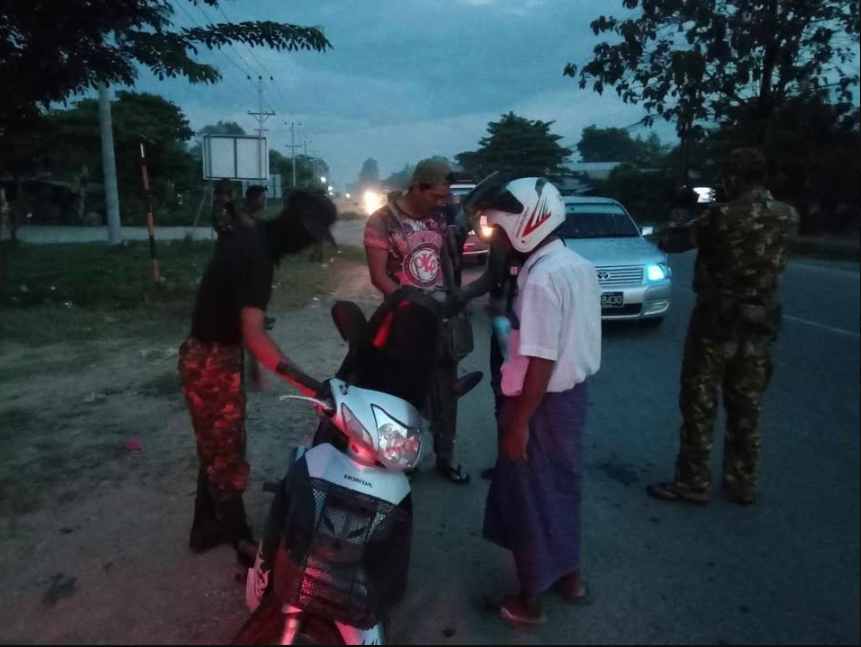
Residents across Mon State say they are being forced to check road conditions before traveling as authorities have resumed operations to seize unlicensed vehicles widely used by local communities.
The crackdown has spread to village roads and smaller routes in nearly all townships, targeting unlicensed vehicles that many residents rely on for work. Market vendors, plantation workers and rubber tappers are facing transportation difficulties, with some unable to continue their regular work.
The Independent Mon News Agency has gathered accounts from residents who rely on unlicensed motorcycles and are experiencing difficulties with their daily travel and livelihoods.
A young woman from Chaungzon Township said:
“They are making arrests every day, but they move from one village to another. Yesterday, they were around Kamarmaw. I do not know which village they are targeting today. When people find out they are waiting in a village, they avoid traveling through that area, so the teams move on to another village.
They do not wear uniforms when they carry out these arrests. They wear civilian clothes. They do not take people away, but owners have to pay 1.25 million kyats to get their motorcycles back. They do not seize every motorcycle they see. They usually take only two or three in each village.
Now we have to be very careful, and we are afraid to travel anywhere. We have to use motorcycles with valid licenses and complete documents. Some people travel by car instead. Even traveling from one village to another requires caution.
They do not issue licenses either, and young people naturally want to ride newer motorcycle models. When they demand money to release a motorcycle, they ask for whatever amount they think they can get from the owner. The amounts vary from person to person.
They also tell people not to disclose how much they paid to recover their motorcycles. The amounts demanded are different. If someone cannot pay to get their motorcycle back, they threaten to hold both the person and the motorcycle for three months.”
A male schoolteacher from Mudon Township said:
“Many people now use their motorcycles only when necessary. Plantation workers have to travel when the inspection teams are not around. These days, they make arrests on the roads whenever they want, whether during the day or at night.
Young people no longer dare to go out in the evenings. With people also being arrested for forced military recruitment, young people are traveling much less than before.
The crackdown is worst in Mudon Township. The teams move from one place to another, including Ka Mar Wet, Phaedo, Ka Law Sot and Setthwei.
In one village near Phaedo, someone returning from a plantation was arrested and had to pay 500,000 kyats. In some villages, ward or village administrators have to negotiate and help secure the release of those arrested.
They seize motorcycles from people returning from plantations. Sometimes they take both the riders and their motorcycles, and families have to pay money to get them back.
These are surprise inspections, so nobody knows exactly where the arrests will take place.
They wait inside villages and also carry out arrests on main roads outside the villages. Market vendors are too afraid to travel. Soldiers arrive first, followed by traffic police.
Plantation workers and rubber tappers now have to call people near the road entrances in advance to check whether inspection teams are there.
They cannot travel on unlicensed motorcycles, but they are also afraid that their licensed motorcycles might be stolen while they are tapping rubber. As a result, some no longer dare to go to work.”
A resident of Ye Township said:
“Since the motorcycle crackdown began last week, 74 motorcycles were seized on the first day. Some have still not been returned, and several young people were also arrested.
There are several entry and exit routes around Ye, including Chaungtaung Bridge, the roads near Ahsin and Zeehpyuthaung, and the routes toward Mawlamyine and Dawei. The authorities blocked these roads and carried out arrests.
Some people have urgent reasons to enter the town, so they take the risk. Some have been arrested.
Now, only people whose motorcycles have all the required documents and equipment are traveling between places. Others have stopped using their motorcycles.
Some people are even worried that the authorities might come to their homes to seize motorcycles. Owners of expensive motorcycles are particularly concerned.”