Myanmar’s military junta has been carrying out daily airstrikes in an effort to regain control of territory it has lost to resistance forces.
On September 28, the junta launched airstrikes on areas around India Market in Kyauktaw, Rakhine State, and near the Kassapa Nadi Bridge, both of which are under the control of the Arakan Army (AA). The AA said the attacks killed 50 civilians and injured many others.
A military analyst said the junta appears to believe that heavy use of air power could help it regain territory controlled by the AA, but that the strategy has not proved effective.
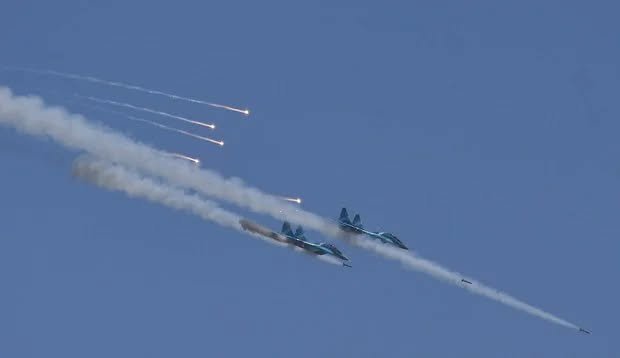
“They seem to believe that using air power heavily will help them win on the battlefield. But even in the early stages of the resistance, when the movement was operating underground, they were unable to eliminate it completely. Now, resistance forces control as many as 13 or 14 townships and have developed structures resembling a parallel administration. So no matter how many bombs the military drops, it is unlikely to be able to retake those areas. There will be damage, and plans will be made to respond to it, but that does not mean the military can return and regain control. They seem to think that airstrikes will allow them to move in on the ground. But in reality, they no longer have enough capable ground troops to follow up.”
ISP Myanmar reported on September 30 that there had been at least 115 incidents of mass killings of civilians between February 1, 2021, and September 29, 2026, including the bombing of India Market in Kyauktaw.
The group also reported that at least 1,583 airstrikes had been carried out across Myanmar during the five months since General Ye Win Oo became military chief.
Although the junta has been forcibly recruiting people under the conscription law and deploying them in military operations, its forces have struggled to achieve their objectives, said Comrade Aye Lwin of the All Burma Students’ Democratic Front (ABSDF). He said the junta has instead increasingly targeted civilians in areas controlled by resistance forces.
“They are carrying out airstrikes, but the impact on resistance fighters is often limited. In reality, it is civilians who bear the brunt of these attacks, losing their lives, homes and property. Take the incident in Rakhine last week, for example. I cannot say for certain whether the intention was to frighten civilians and send the message that this is what will happen if they live under ULA/AA administration. But there is clearly an element of pressure and intimidation. Similar tactics are being used in central Myanmar. Propaganda and intimidation are also being used on the ground.”
The junta’s offensives and airstrikes have increasingly focused on western and central Myanmar, according to ISP Myanmar. Magway Region was the most heavily targeted, with at least 322 attacks recorded.
There were also at least 301 attacks in Chin State, more than 242 in Sagaing Region and at least 222 in Rakhine State.
A military analyst said the junta’s continued attacks on civilians reflect its reliance on brutality as a means of maintaining its position in the conflict.
“War is inherently brutal. But when both sides are capable of violence, the more ruthless side can sometimes gain an advantage. That helps explain why the junta has managed to survive for so long. They are willing to do things that others would not. Courage and cruelty are not the same thing. Their willingness to act brutally has become an advantage that they repeatedly use in the conflict. As the war enters its later stages and the military becomes weaker and suffers more losses on the battlefield, attacking civilians becomes another way for the junta to exert pressure. It is part of the brutality that has become a strategic advantage for them.”
According to data from Blood Money, Myanmar has experienced 7,899 airstrikes since the military coup, resulting in the deaths of at least 4,836 civilians.
Meanwhile, resistance forces have captured and taken control of large areas previously held by the junta. The military has continued to launch offensives in an effort to retake the territory it has lost.