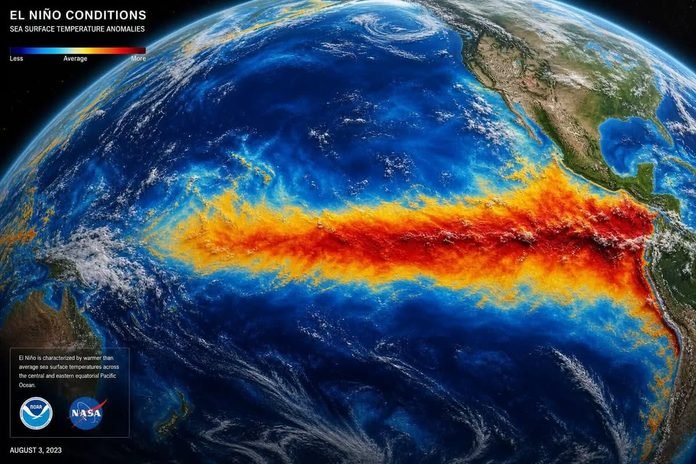
El Niño conditions could intensify significantly in the coming months, increasing the risk of unusual and extreme weather in different parts of the world, according to a warning from the World Meteorological Organization (WMO).
According to the WMO’s September report, El Niño conditions have developed in the Pacific Ocean and are forecast to reach their peak toward the end of 2026.
The conditions could push temperatures higher in parts of Myanmar, with daytime temperatures in the southern states of Mon and Karen potentially reaching 40 degrees Celsius, according to a weather observer and forecaster in Mon State.
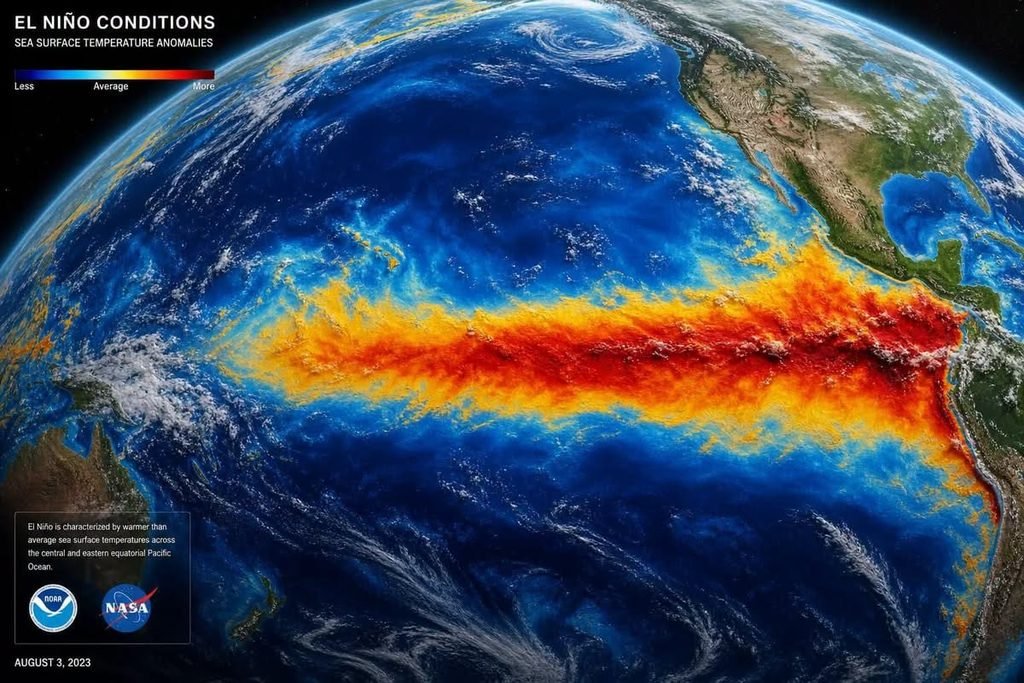
“During summer, temperatures in Mon and Karen states in southern Myanmar are normally around 36 degrees Celsius and can reach about 38 degrees. With this super El Niño, temperatures could rise by around five degrees. This summer, temperatures could reach 40 degrees or even higher. At the moment, they are still around 31 degrees,” the forecaster said.
Because Myanmar is currently transitioning from the rainy season to the cool season, the effects of extreme heat are unlikely to be felt immediately. However, El Niño conditions could continue through the end of February 2027, potentially bringing more intense heat in March, April and May, the forecaster said.
“According to weather data, temperatures are unlikely to become extremely high before the end of this year. But after February 2027, March, April and May could become very hot. Central Myanmar will be hotter than our region. If temperatures become extremely high, nighttime temperatures may also remain elevated. Prolonged heat waves could become dangerous,” the forecaster said.
The intensity of El Niño does not necessarily correspond directly with the severity of its impacts in individual countries, the forecaster said. In Myanmar, possible effects could include drought, extreme heat and varying rainfall patterns, with some areas receiving more rain and others less.
Although El Niño develops in the Pacific Ocean, it can affect Myanmar through irregular rainfall patterns, higher daytime temperatures, drought and unusual storm activity, according to statements issued by Myanmar’s Department of Meteorology and Hydrology (DMH) in July and August.
Authorities in relevant sectors, including health, water resources and agriculture, have also been urged to make preparations for possible impacts.
Researchers have also estimated that a severe El Niño could contribute to as many as 450,000 deaths over a six-month period.