Thailand’s Prime Minister Anutin signed new regulations on August 26 that allow foreign nationals who violate the law to be deported. The regulations came into effect on August 28.
The new regulations cover illegal entry into or residence in the country; working in violation of laws governing foreign workers; violations of laws governing foreign businesses, including working in restricted occupations reserved exclusively for Thai nationals; forging or using forged government documents; committing criminal offenses punishable by five years or more in prison; and assisting or participating in any of the above offenses. Those found guilty of such violations may be subject to deportation after receiving a criminal penalty.
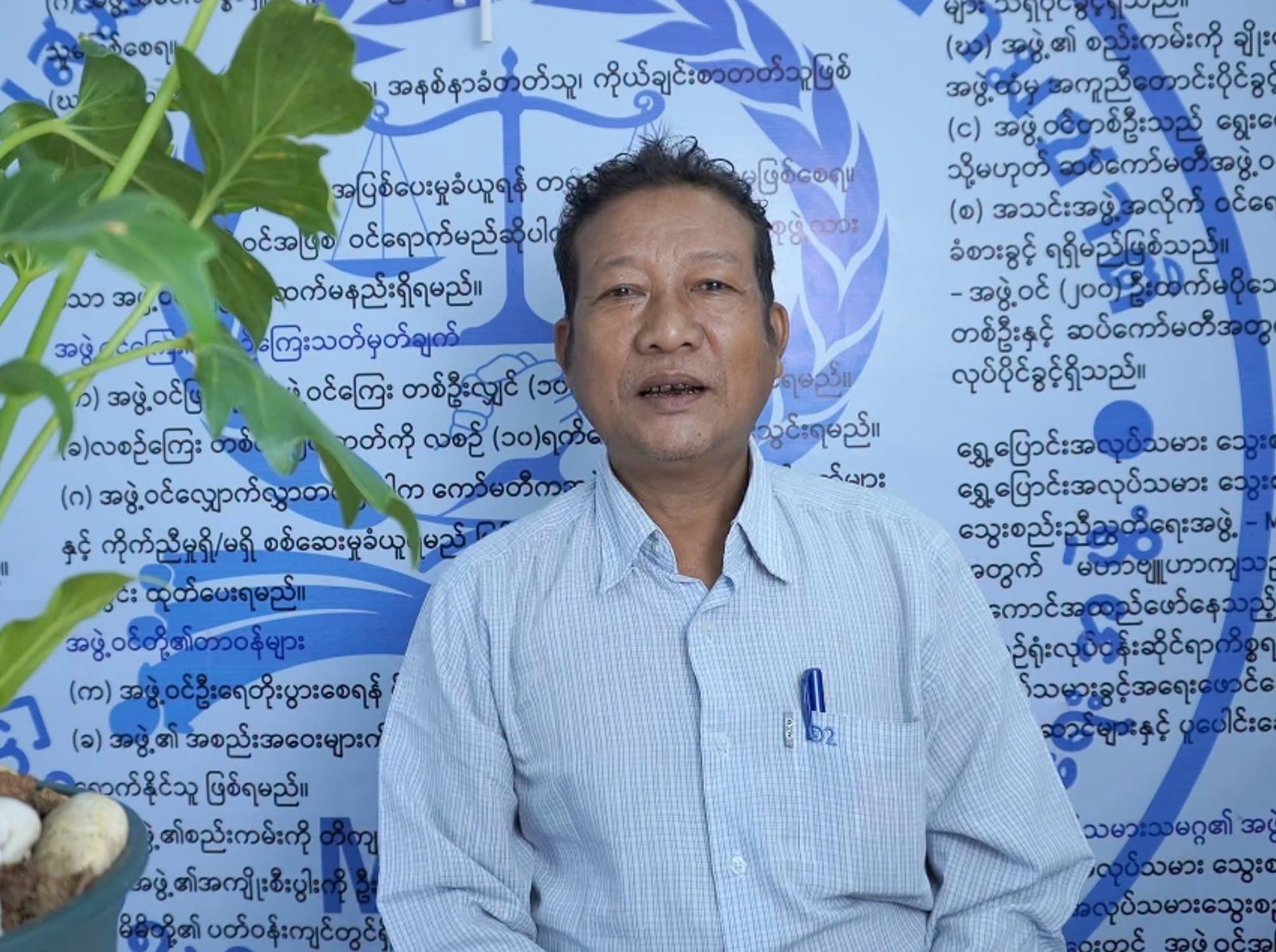
To understand how Thailand’s newly enacted regulations may affect Myanmar migrant workers and how they should respond, IMNA spoke with U Aung Kyaw, a migrant workers’ rights advocate who assists Myanmar migrant workers. The interview transcript is published below.

Q: What impact could the recent regulations signed by the Prime Minister have on migrant workers?
A: Even before these regulations were formally enacted, Myanmar, Cambodian, Laos, and Vietnamese migrant workers living in Thailand were already subject to inspections and legal action under existing laws. Those with improper or invalid documents or those working in unauthorized occupations could be arrested and deported to their countries of origin.
However, this time, because the regulations have been formally approved and signed by the government and the Prime Minister himself, I would assess the situation as becoming more concerning for us.
Even before the regulations were officially enacted, authorities were already conducting inspections and taking action almost every day across Thailand’s 77 provinces, including deporting people to their countries of origin. This has been happening for a long time.
Now that the Prime Minister has formally signed the regulations, I believe enforcement will become more effective and stricter. The Thai authorities say the measures are intended to ensure that the large number of foreign migrant workers—including workers from Myanmar, Cambodia, Laos, and Vietnam—live in the country in an orderly manner and in accordance with the law.
Therefore, compared with the situation before these regulations were enacted, I believe enforcement will become more rigorous and effective now that they are officially in place.
Q: What should Myanmar migrant workers be particularly careful about?
A: First and foremost, because we are foreigners, we need to ensure that all our legal documents and supporting records are properly and correctly arranged in accordance with Thailand’s existing laws. We should also work only in occupations that are legally permitted for foreign workers in Thailand.
If we live in accordance with the law in this way, there is no major reason for us to be seriously concerned about the current regulations.
However, if our documents are not valid or properly arranged, or if we work in occupations outside those legally permitted for us, then authorities can take effective legal action against us and deport us to our countries of origin.
Therefore, I believe this is something that all migrant workers—including Myanmar, Cambodian, Laos, and Vietnamese workers—need to pay close attention to and understand clearly.
Q: What difficulties are migrant workers currently facing in obtaining documents that allow them to reside legally in Thailand?
A: It is very difficult—extremely difficult.
Twenty or thirty years ago, when we worked on issues affecting migrant workers in Thailand, the process was not as difficult as it is today. Employers themselves would bring the foreign workers they intended to hire—whether they were from Cambodia, Laos, Vietnam, or Myanmar—to One Stop Service Centers, where all the necessary procedures could be completed properly in one place.
At present, however, the Thai Ministry of Labour no longer handles these processes directly. Instead, the work has been transferred to private companies through an outsourcing system.
As a result, the process has become extremely complicated and bureaucratic, with workers having to go through multiple stages. In the process, we have seen many migrant workers being exploited and overcharged by brokers and agencies.
Q: The Thai government has also said that deported migrants may be able to go to a third country. How realistic is that possibility?
A: In my view, that is simply a nicely worded idea.
What they mean is that if a migrant worker is considered to be in a particularly dangerous situation, they may not necessarily be sent directly back to their country of origin. If there is a third country willing to receive them, or an organization willing to arrange for their relocation and cover the costs, then they could potentially be taken to that third country.
But in reality, as everyone in the media already knows, Myanmar migrant workers who come to Thailand generally do not arrive as internationally recognized professionals or highly skilled specialists. Most are ordinary migrant workers from working-class or economically disadvantaged backgrounds.
So the question is: how would they establish those connections? How would they connect with organizations such as UNHCR or the ILO? These are difficult processes.
In reality, such possibilities remain distant and are more of a future prospect than an immediate solution.