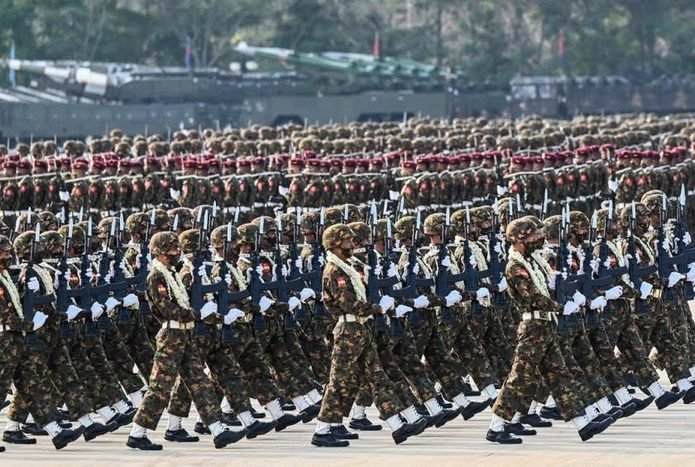
Conscripts forcibly recruited by the military junta are being used extensively on the frontline. According to confidential military documents, conscripts account for more than 70 percent of some frontline deployment columns.
A frontline deployment list for July 2026 for Infantry Battalion No. 421 shows that more than 70 percent of the troops assigned to the frontline were conscripts. The confidential military documents were obtained through CDM Captain Zin Yaw.
The document shows that of the 152 personnel assigned for frontline deployment, only around 11 senior and junior officers and 22 regular soldiers were included. The remaining 109 were conscripts.
CDM Captain Zin Yaw said the figures show that the military is increasingly relying on conscripts because of a shortage of regular troops.
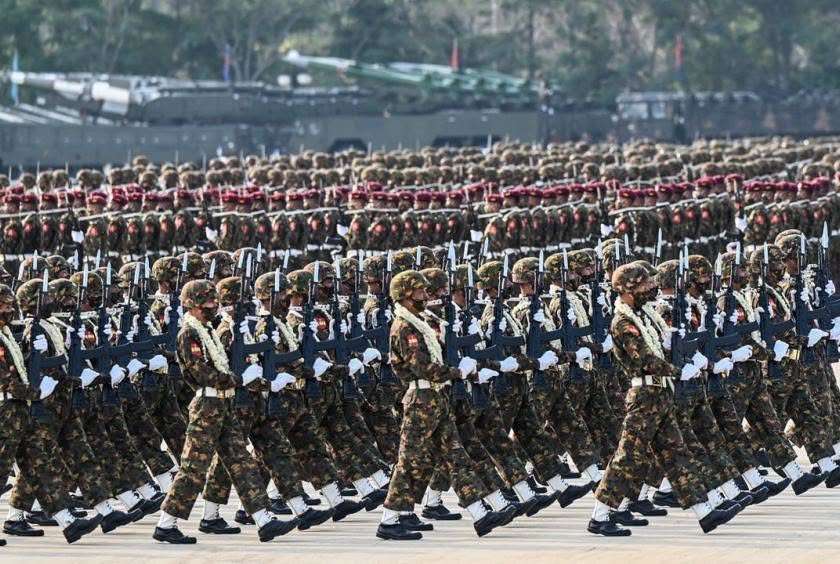
“They are already facing a serious shortage of regular soldiers and are mainly relying on conscripts. Based on these figures, around two-thirds are conscripts. Regular officers serve with the main units, while conscripts are assigned to flank units and frontline positions. In other words, over the past two years, they have been making extensive use of conscripts,” he said.
The military suffered heavy losses after the 2021 coup as the armed resistance expanded. It lost battalion headquarters, towns and military equipment, while facing an increasing shortage of troops. To address the shortage, the military junta enacted the conscription law in 2024, formally establishing a system for recruiting soldiers.
Those who escaped from the military have reported that around 5,000 people were recruited in each intake and sent to the frontline after three months of military training. In some cases, recruits were sent to the frontline after only one month of training.
A conscript who sought refuge with the Arakan Army (AA) in Rakhine State also said conscripts are being used as expendable troops.
“Whenever there was fighting, the commander and his aides always stood near the fence. They would say, ‘Whoever retreats, shoot them dead.’ I personally witnessed two cases. Two soldiers were retreating right in front of me, and the commander’s aide shot them. They died,” said a soldier named Nay Lin, who defected in 2025.
Revolutionary allied forces have also released evidence showing that conscripts were ordered to carry out attacks in which they were expected to sacrifice their lives. They have also documented conscripts who were killed or captured on the frontline.
These conditions have made military recruitment increasingly difficult, prompting the Myanmar military to carry out forced recruitment more openly.
The military has increasingly recruited young people by going to their homes at night, taking people at checkpoints and forcibly recruiting those passing by.
A person helping those forcibly recruited for military service in Pyay said the situation had become increasingly unrestricted.
“Now there are no limits. They even come into people’s homes and take them away. When we go looking for them the next morning, they are not even at the camp. We only hear which military unit they have been sent to. Young people are afraid to go outside. We see parents whose children have disappeared crying at the camps. Once someone is recruited, it feels as though there is no way back. How can any parent feel at ease?” the person said.