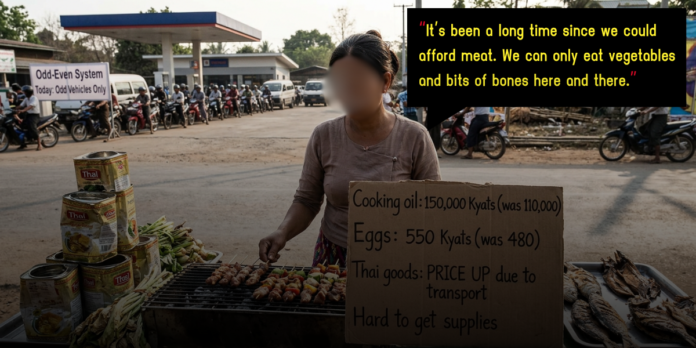
In addition to the difficulty of purchasing fuel, rising fuel prices have also led to increased costs in transportation fares and freight. As transportation expenses rise, commodity prices have also increased.
With the upcoming Thingyan festival approaching, communities are growing increasingly concerned that prices for festival-related items and basic food commodities will rise even further.
Due to the rising cost of essential food items, low-income families are now facing food insecurity. The following are voices from household providers who are bearing the brunt of rising commodity prices caused by the fuel crisis.
A grilled food vendor from Kyaikhto:
“At the moment, it’s very difficult to buy supplies. We sell grilled food. The cooking oil we use has increased from around 110,000 kyats to 150,000 kyats. Seasonings and everything else are also becoming scarce.
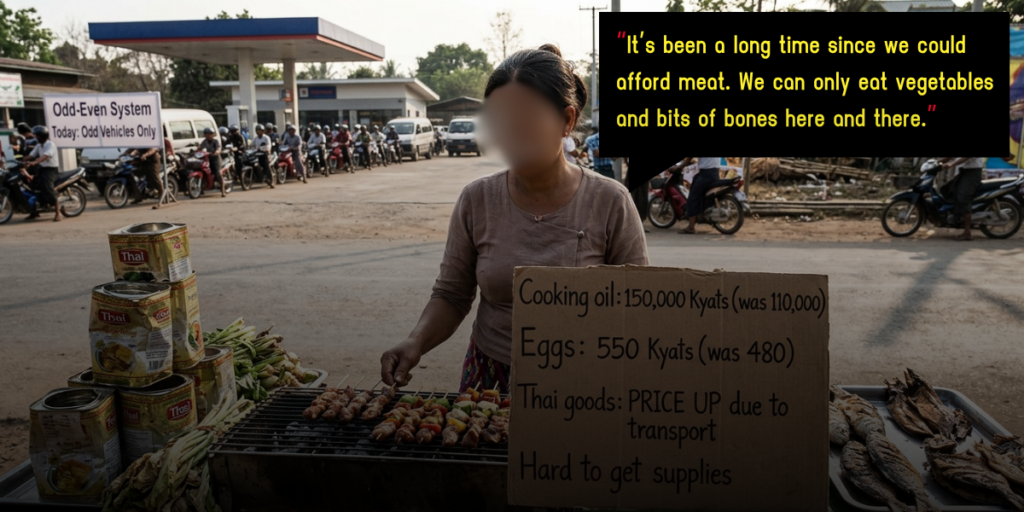
Because of transportation and supply chain disruptions, even Thai products have increased in price. There’s barely any profit left—we’re just selling enough to stay afloat. We’re no longer able to stock up on goods, and as Thingyan approaches, things will likely become even more difficult. If we can’t secure supplies, we may have to close the shop. Even eggs have gone up from 480–550 kyats, and we now sell them grilled for around 800 kyats.”
A housewife from Thanbyuzayat:
“As fuel prices rise, transportation and commodity costs continue to climb in a cycle. Prices fluctuate constantly—pork has reached 40,000 kyats, small shrimp range from 30,000 to 50,000 kyats, and a bottle of cooking oil costs around 8,000 kyats.
Daily wage workers earn just over 10,000 kyats, which is no longer enough to support a family; even this amount cannot cover meals for two people in a day. Onions have jumped from 2,700 to 4,000 kyats per viss. Viss is a traditional Burmese unit of weight commonly used in Myanmar, equivalent to approximately 1.6 kilograms
We can’t even afford to prepare offerings or meals for elders during Thingyan this year, as prices have increased multiple times.”
A housewife from Paung Township:
“Good-quality dried fish now costs around 200,000 kyats per viss—the highest it’s been this year. I don’t think it can go much higher.
For ordinary families, even with hard labor, daily income is only about 25,000 kyats. It’s been a long time since we could afford meat; most of the time, we survive on vegetables and scraps of bones.
We have to buy rice and snacks for the children, yet we don’t earn daily—sometimes only once every three or four days. Whatever we earn goes toward paying debts, and that’s how we manage. We’re just surviving the best we can.”
A housewife from Kyaikmaraw:
“As Thingyan approaches, prices for items like beans, onions, dried shrimp, and dried fish are rising. Higher fuel costs have made transportation by car and boat more expensive, which pushes prices even higher.
Cooking oil and rice have increased by about 15,000 kyats compared to last month. Shwebo rice has gone from 100,000 to 115,000 kyats, and a bundle of roselle leaves now costs 1,000 kyats, up from 300–400 kyats.
Life has become very difficult for the basic working class, as income is harder to earn. Only those returning from Thailand can afford to buy and consume these goods. Even water festival items, like water guns, have doubled in price—some now cost 30,000 to 45,000 kyats. Prices are rising not only compared to last year, but even month to month. We can no longer buy in bulk, and purchasing by the viss is even more expensive.”
A vegetable seller from Mudon Township:
“Vegetables are no longer arriving due to fuel shortages—we don’t even have goods to sell. The crops we planted are dying because we can’t irrigate without fuel.
In summer, we usually deliver vegetables to customers, but transportation has become very difficult. Vegetables coming from Upper Myanmar are likely to become even more expensive. Water spinach now costs 200 kyats to buy and sells for 300 kyats, while prices for roselle and coriander have also risen. Tomatoes from Upper Myanmar have increased from 5,000 to 6,000 kyats per viss, with at least a 500-kyat jump.
We don’t even have fuel to go to rubber plantations to tap latex. Even people returning from Thailand are heading back early, without waiting for Thingyan, out of concern over rising costs. Transportation fares have also increased drastically.”