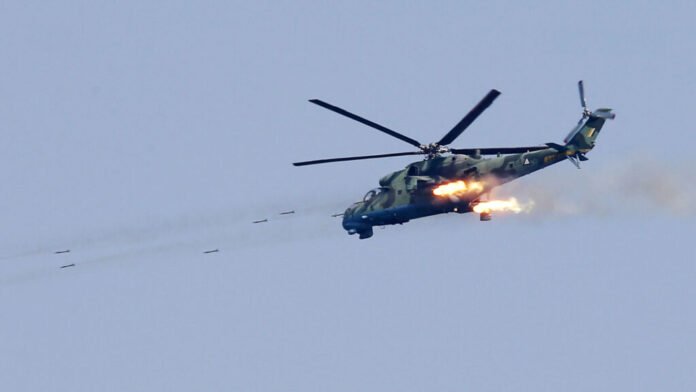
In Myanmar’s ongoing civil war, the military’s only weapon capable of threatening revolutionary forces is airstrikes.
Since the military coup, ethnic revolutionary armed groups have strengthened their manpower and modern weaponry, becoming comparable to the Myanmar military in combat capability. However, combat aircraft remain exclusively controlled by the military.
Military researchers say that after elections, the military’s strategic priority is the peace process, and airstrikes are often used as pressure tools to force negotiations.
In February 2026, airstrikes intensified in areas controlled by major armed groups, including the Kachin Independence Army and the Arakan Army, particularly in Kachin State and Rakhine State.
Even the town of Laiza, where KIA’s headquarters is located, was threatened by fighter jet demonstrations, and villages near the town were bombed.
According to data compiled by Independent Mon News Agency, there were at least 20 airstrikes within five days.
KIA spokesperson Colonel Naw Bu stated that the military claims its airstrikes are retaliation for attacks on its airbase. He said KIA does not conduct such attacks, and in his view, the military believes that pressure through attacks will force dialogue.
However, he argued that military pressure tactics are unlikely to work even if negotiations take place. “I have not heard any real intention for talks. Even if they negotiate, using pressure to gain an advantage will not be effective,” he said.
Currently, the KIA continues its offensive to capture Bhamo, the second-largest city in Kachin State, reportedly seizing a battalion base and several defensive outposts.
Similarly, on February 24th, an airstrike hit the market in Yo Ngu village, Ponnagyun Township in Rakhine State, resulting in the deaths of at least 18 civilians.
Arakan political observers believe the purpose may have been to reduce public support for the Arakan Army.
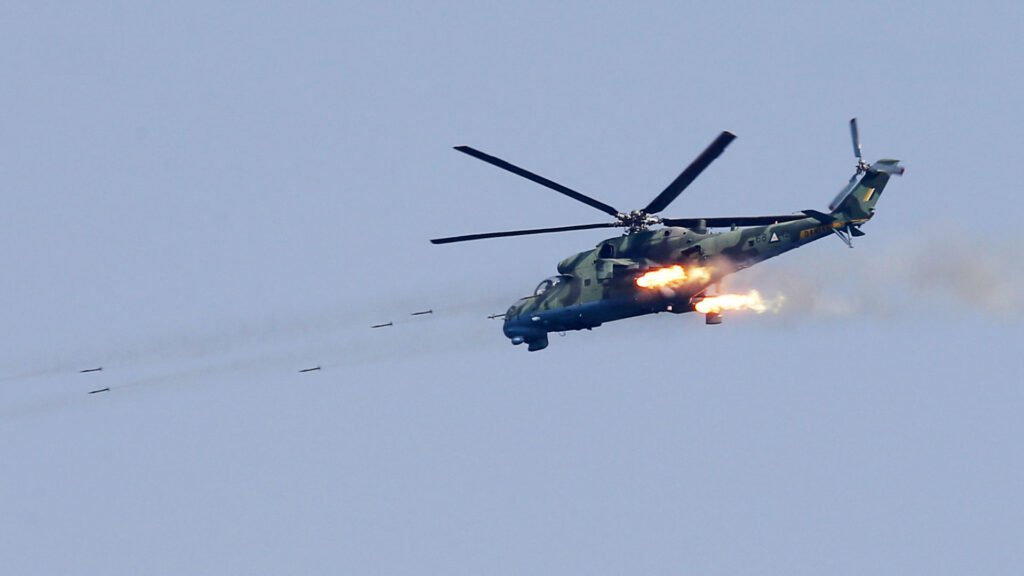
“The aim is to destabilize people’s daily lives, make them feel unsafe under ULA-AA control, create social division, and increase the number of internally displaced persons. However, instead of achieving this, such actions may only generate stronger resentment and resistance. The military’s bloody historical record will remain in history,” said Rakhine politician U Phay Than.
The military has previously used similar pressure tactics when attempting to retake major cities in northern Shan State.
A military researcher commented, “The current path cannot be called a peace strategy. It may only lead to temporary ceasefires. As long as the military participates in politics and monopolizes national power, ceasefires may occur, but fighting will eventually resume. Look at the NCA — even after ten years, fighting continues.”
Plans are reportedly underway for peace negotiations in Naypyitaw along with the formation of a new government, according to a statement by Union Solidarity and Development Party (USDP) MP Bullet Hla Swe.