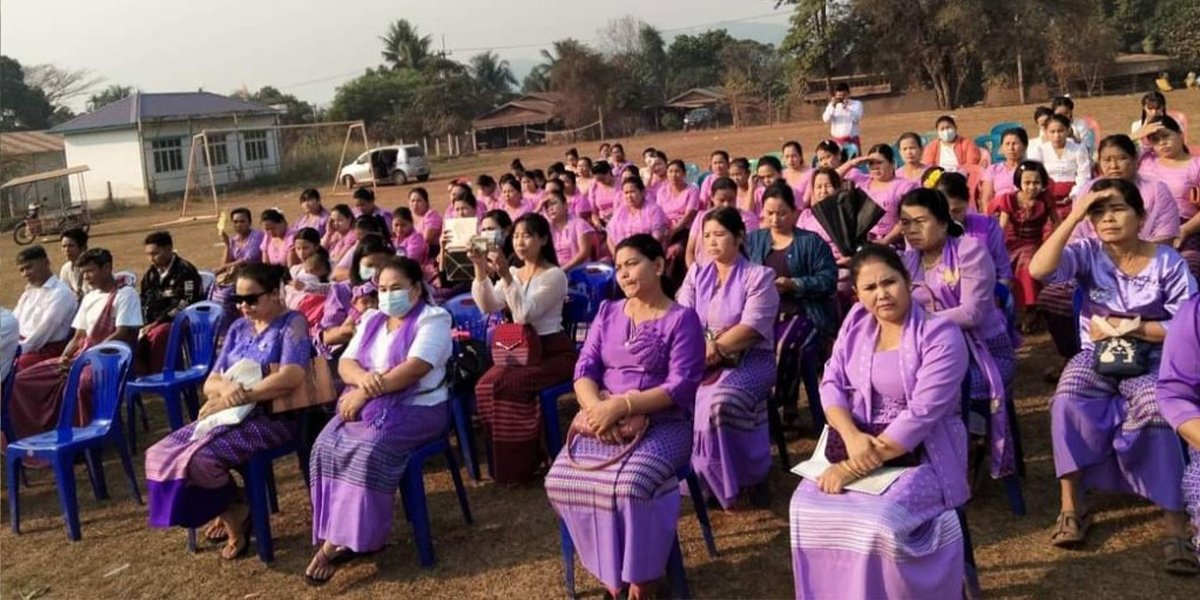
In a country where patriarchy and ethnic chauvinism run deep and authoritarianism prevails, Mon women—like many ethnic women—still fight for leadership and decision-making roles.
Due to the COVID-19 pandemic and the ongoing crisis following the military coup, working-class and middle-class women have become increasingly burdened with livelihood concerns and family responsibilities. At the same time, discrimination and marginalization against women continue to be part of their daily social and economic lives.
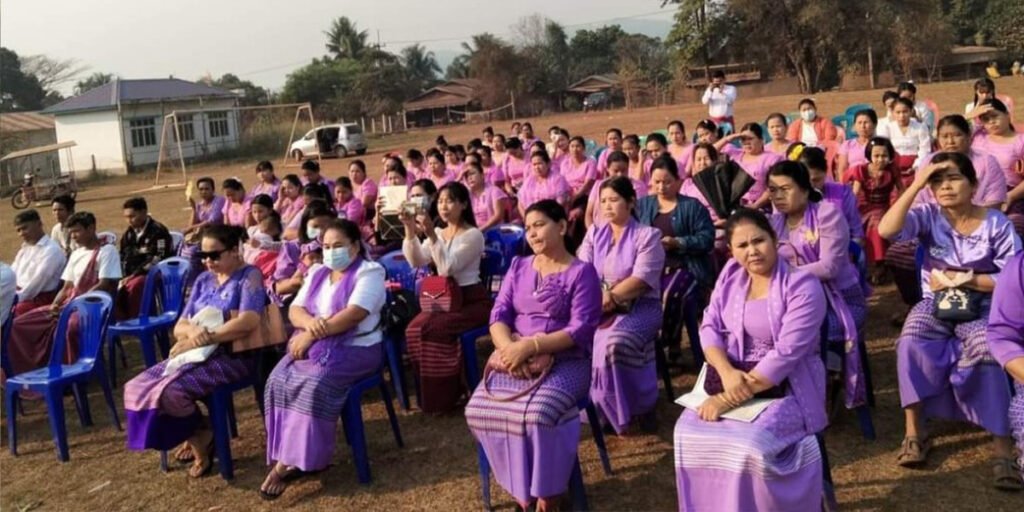
The 22nd Mon Women’s Day, which falls on the 12th waxing day of Tabaung, will be held under the theme: “Let Us Build Peace Through Women’s Leadership.” Mon women’s rights activists say they will mobilize efforts to strengthen women’s leadership roles.
Believing that peace can be achieved through women’s capacities, a spokesperson from the Mon Women’s Organization (MWO) was interviewed about the challenges preventing Mon women from meaningfully participating in leadership roles today.
Q: Amid insecurity following the coup, what is the current situation of Mon women’s leadership in political, economic, and social sectors?
A: The current situation is difficult for everyone. However, in Mon State, it is less severely affected by armed conflict than some other regions. Among the ten townships, the situation is divided; areas from Ye to Thanbyuzayat are somewhat more tense. In times of conflict, women and children face greater hardships.
Previously, we encouraged women to participate in politics. We conducted many training sessions and workshops designed to develop skills, boost confidence, and provide networking opportunities so that women could step forward and take leadership roles. Now, some have joined the revolutionary movement. As more people move outside the country, the number of those active inside has decreased.
Economically, things have not drastically declined, and daily life continues somewhat normally, but rising commodity prices have made conditions more difficult. In social affairs, women’s participation has decreased significantly. Still, we remain connected with women in communities and continue cooperating with local civil society groups as much as possible. Our strength has reduced, but we are trying to maintain connections and work within what we can manage locally.
Q: How satisfied are you with the current level of women’s participation in leadership?
A: Since we cannot operate freely as before, we are not very satisfied. As women activists, we do not have full freedom to act. Even when we try, there are many restrictions. It is not possible to cooperate with the current authorities, so collective organizational activities are limited. Women are mostly working individually at the local level; it is difficult to operate formally as an organization.
Q: Why are Mon women still unable to fully participate in leadership roles? What challenges and barriers exist?
A: There are many challenges. Under the current situation, numerous restrictions are imposed by the military, and its presence is strong. Previously, we worked together with township-level administrative bodies and organized activities to help capable women step forward.
Now, travel itself is risky. It is unsafe for us to go out, and we cannot easily mobilize women. Leadership is divided between domestic and international contexts, and tensions between revolutionary groups and government structures leave us in a difficult position.
Q: What is MWO doing to address the weakening of women’s capacity and leadership?
A: We have worked extensively to broaden women’s perspectives and help them step forward into leadership, and we will continue doing so. However, many women are still unable to reach leadership positions because they are overwhelmed by marital and family responsibilities.
No matter how busy or financially constrained they are, if they have the will and confidence, we urge them: step forward, be courageous, and set an example for others. Do not hold back because of shame or fear. Your voice and actions matter. Many women feel anxious about standing alone in front of others, but together we must rise.
In the past, women leaders were often in their 30s or 40s. Now, we are prioritizing youth leadership and promoting women in their 20s. We provide education and political awareness across various sectors to develop their leadership skills, prepare them for leadership roles, and support their effective engagement in decision-making.
Q: How much freedom do women have when carrying out women’s rights activities?
A: We cannot openly use our organization’s name in many cases. Without aligning with the military, it is very difficult to operate openly inside the country. However, there are still Mon women’s groups active in some townships and villages. Individuals continue to help in personal capacities. Some women’s groups in rural areas have existed for a long time and continue their work as much as possible. We mainly provide support and advice.
In places like Thanbyuzayat, Ye, and Chaungzon, some activities are still possible. In other areas, there are greater difficulties.
Q: What message would you like to give to the Mon women?
A: This year’s theme for Mon Women’s Day is “Let Us Build Peace Through Women’s Leadership.” After the coup, ongoing conflicts, and the pandemic—which disrupted communication—many women experienced discouragement and emotional hardship. We want to help them regain strength and confidence.
We believe women’s leadership can lead to peace. With this theme, I call on all women: have self-confidence, move forward boldly, and unite—inside and outside the country—for the struggle for ethnic liberation and federal democracy. Step up, join hands, and become the leaders your communities need.