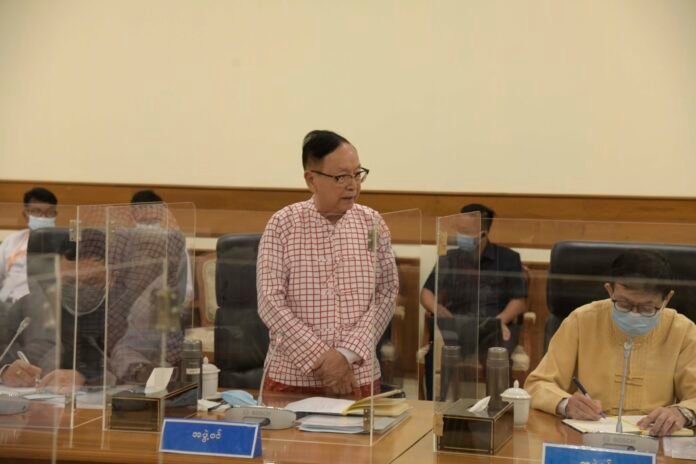
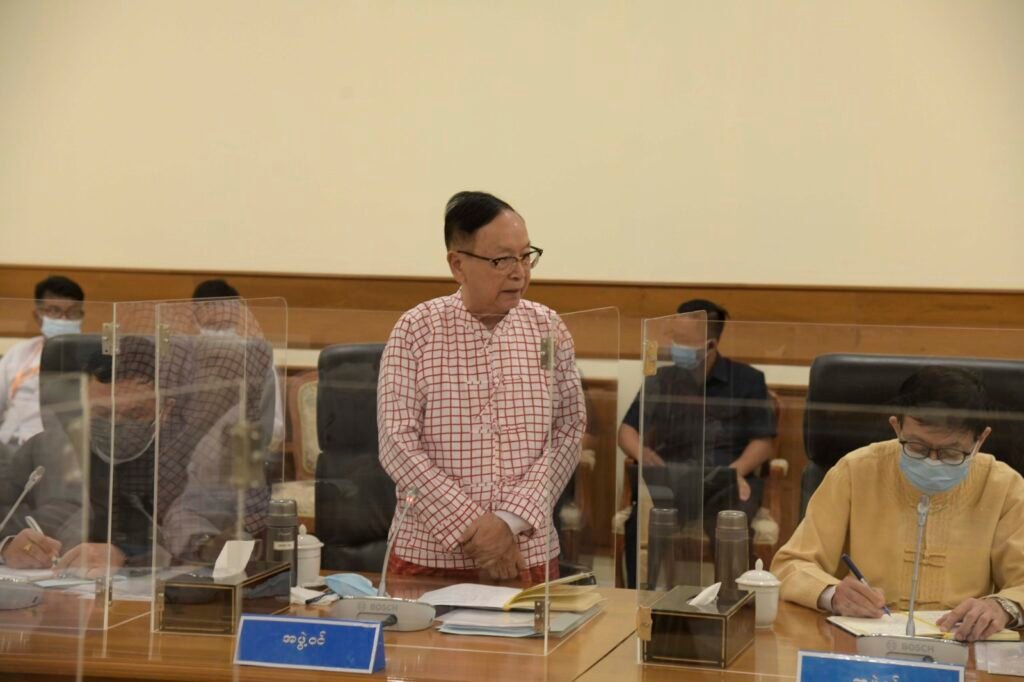
The Mon Unity Party (MUP), which will have a total of 17 representatives in the Pyithu Hluttaw, Amyotha Hluttaw, and Region or State Hluttaw, intends to prioritize domestic peace issues in the legislature, Amyotha Hluttaw Representative Dr. Banyar Aung Moe told IMNA.
The election commission, following the conclusion of the elections, announced on February 3 during a meeting with Russia’s Security Council Secretariat that Hluttaw (parliament) sessions will begin in the third week of March.
In recent days, officials have also held coordination meetings in Kayah State and Mon State to ensure that the third regular sessions of State and Region Hluttaws are successfully conducted, according to an announcement from the election commission.
Dr. Banyar Aung Moe was contacted to comment on what rights and opportunities may arise for ethnic groups in the new Hluttaw formed from a non-transparent election and whether the military would dominate the government.
Q: Now that the lists of elected representatives are being finalized, what preparations is the Mon Unity Party making?
A: The time will come when the new Hluttaw convenes. We are currently preparing for it. State-level representatives will attend the state Hluttaws, while Union-level representatives will go to Naypyidaw. That is the usual process. So far, there hasn’t been any special directive from above. We are currently registering the Hluttaw representatives and will later notify them officially about attending. As usual, the Hluttaw will carry out its work, and there hasn’t been any special guidance given to parties yet.
As for the Mon Unity Party, we are holding central committee meetings. All elected representatives from our party are being invited to discussions. This is to ensure their commitment to the party, to show loyalty, and to operate according to the party’s policies. The party is preparing for all necessary matters.
Q: What rights or powers do you think the Hluttaw will bring for ethnic groups?
A: Once the Hluttaw convenes, our parties will continue to implement what we promised to the people, and we will also have the authority to act. Our current situation relates closely to peace and conflict issues. While some initiatives can be implemented if the Hluttaw approves them, local security conditions may still prevent some actions. Even though the Hluttaw exists, today’s situation is different from before. Regarding politics, we will continue to strive for peace and to establish a federal democratic state. But this depends on all parties and all Hluttaw representatives. To be precise, we are a small group in the Hluttaw, with only 10 representatives at the Union level. How much other parties will align with our path remains to be seen. Especially if parties forming the government are aligned with us and others follow, only then can we fully say how far our promises of peace and federal democracy to the people will be realized.
We also need to closely observe the situation on the ground today. Therefore, those leading in the political sector can communicate and deliberate more easily with each other.
Q: Soon, when a new government is formed, will the military dominate government positions?
A: Currently, the Union Solidarity Party (USDP) received the most votes. Their share alone is over 70%. Together with the military-affiliated bloc, they control up to 80% of seats, so appointments will proceed as they designate. Since the first independence constitution in 1947, the second in 1974, and the 2008 constitution, the ruling parties have had significant discretion over appointments. This has been the case since independence. Therefore, when a majority party wins, their selections may not satisfy minority parties and ethnic groups.
Q: What is special about the current Hluttaw preparations?
A: What’s notable is that in this session, 25% of the Hluttaw will be represented by military personnel. Many elected representatives will also have military backgrounds. What I want to emphasize is that some military leaders have been elected as party representatives. So this Hluttaw is unique in that 25% will come directly from the military, in addition to other representatives with military backgrounds.
Q: Is there anything else you would like to add?
A: We will implement the promises made during the elections. In addition, the perspectives of the public, experts, and the monastic community on ethnic issues, as well as suggestions for the benefit of the people, will be conveyed to the Hluttaw and implemented. Therefore, I encourage the public, scholars, and monks to stay in close contact with the Mon Unity Party representatives and continue providing guidance and suggestions. Thank you.