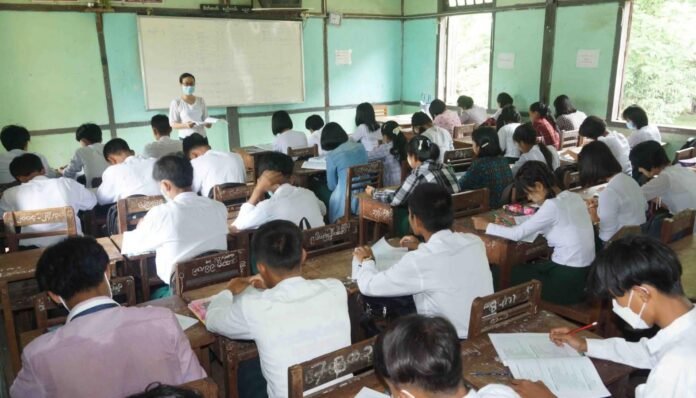
Myanmar’s new education system, introduced to promote practical and student-centered learning, has yet to move beyond rote memorization as exam results remain the main measure of success, according to students, parents and teachers.
The Ministry of Education began rolling out the KG+12 system in the 2016–2017 academic year. By 2023–2024, all grades in basic education schools had adopted the new curriculum. However, students say classroom learning continues to focus on memorizing large amounts of material to pass exams.
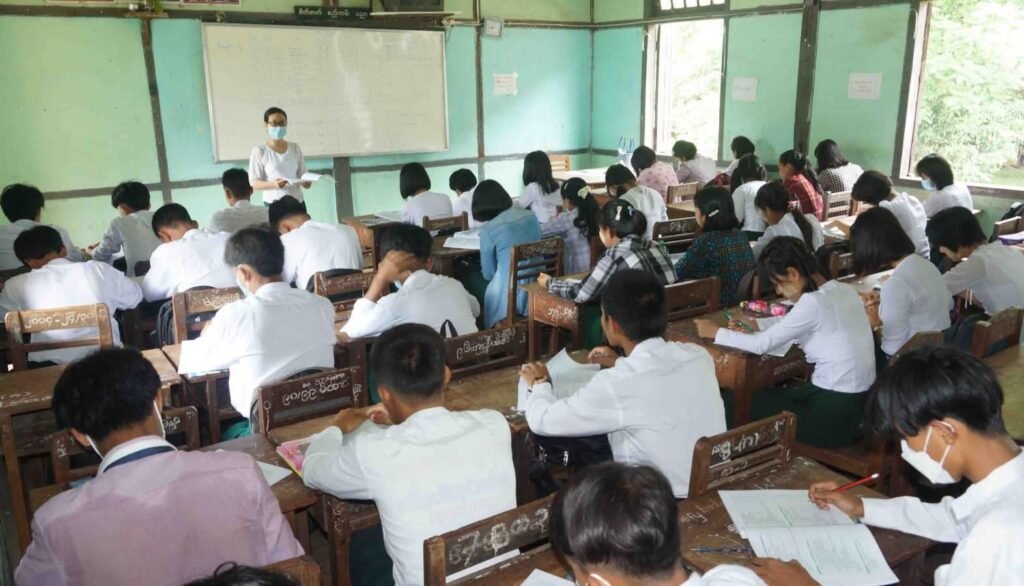
“In Grade 12, we still have to memorize a lot,” said a student who passed last year’s university entrance exam. “We study six subjects like before. We attend private tuition, memorize everything and then take the exam. If you can memorize, you pass. If you can’t, you fail.”
Parents of high school students, especially those in Grades 10, 11 and 12, say they are spending heavily on boarding fees, private tuition and personal tutors to help their children succeed in promotion exams.
A high school teacher from Ye Township said the reform has not achieved its intended results due to an overloaded curriculum, limited teaching time, and shortages of experienced teachers and learning materials.
“Memorization is still at the center of the system,” the teacher said. “We want students to truly understand the lessons, but there isn’t enough time. The curriculum is broader and new, and there are not enough experienced teachers. So we are forced to focus mainly on exam preparation.”
He added that improving the system would require changes not only to the curriculum but also to teaching methods and exam assessment.
The Education Ministry announced on February 2 that it would revise the Grade 12 curriculum starting in the June 2026 academic year, with greater emphasis on industrial, agricultural and livestock-related subjects.
Despite these planned reforms, critics say the education system continues to rely heavily on memorization.