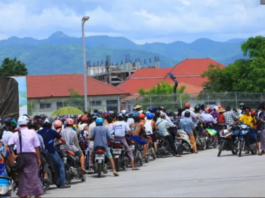
In Mon State, including urban areas under the control of the Military Commission as well as territories controlled by the New Mon State Party (NMSP), the use and trade of various narcotics have become widespread. While action is taken against drug users, drug dealers are effectively allowed to sell drugs as if they were operating legally, according to anti-drug activists.
Those who have obtained permission to trade drugs through bribery of local administrative authorities are now operating in an organized, gang-like manner. They are also expanding the drug market by luring school-aged youth with incentives, sources say.
A resident of an NMSP-controlled area said that individuals close to the Military Commission are able to trade drugs by paying a percentage of their profits, while those with connections to local armed groups secure permission by providing rice, food, and other essential supplies.
“They sell openly, as if it were legal, without fear. The authorities only arrest users. Not a single dealer is punished. Because the dealers pay taxes, they are not arrested. They give money, rice, and other supplies to armed groups. This is not only happening with the military—Mon armed groups are also involved. Everyone knows it,” said a local Mon man.
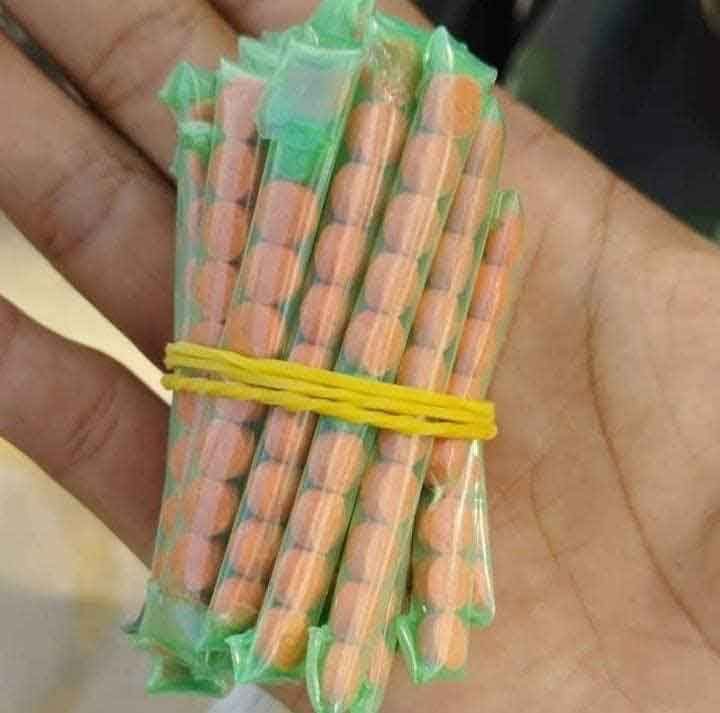
As a result, drugs are now easily available not only at KTV lounges, bars, and gambling dens, but also at public markets and street stalls. Before the military coup, a WY pill cost around 5,000 kyats; now it sells for only about 2,000 kyats.
Women are also involved in drug trafficking, and some who previously owned no property have become wealthy in a very short time, the same resident added.
Due to the ease of access, the use of ICE, WY, and other drugs has increased to life-threatening levels. Drug use among underage students and youth is also rising, creating a serious and worrying situation, according to the Mon Drug Policy Drafting Committee in an interview with IMNA.
“When we categorize the people we met at drug detention centers, we see university graduates, engineering graduates, school-aged youth, and people who have worked abroad—people from all walks of life. Some who recovered and were released later returned again. This shows that Mon youth are deeply sinking into drug addiction. It is not just one group of young people—drug use spans all ages and genders. We need to seriously seek solutions to this problem,” said a responsible member of the group.
A source close to the Mon Unity Party (MUP), which won seats in the election, said the party plans to address the drug problem faced by the public in the upcoming Military Commission parliament.
“We have made a commitment to the people to legally protect them from the problems they are facing. The drug issue is one of them. To solve this problem, the first step is to amend laws at different parliamentary levels,” said a source close to the MUP.
Clause (11) of the Mon Unity Party’s 2025 election manifesto states that the party will carry out drug awareness programs, treatment for drug users, and rehabilitation initiatives.
However, local residents say there is currently no trust in any organization, as authorities—including the Military Commission—are actively enabling drug trafficking.
Earlier this January, in Kabyar Gyi Village, Ye Township, a local youth was arrested by the New Mon State Party (PC) after drugs were found in his possession. He was reportedly beaten during interrogation until he died. Despite this, those involved in drug trafficking operations behind the scenes were not identified or arrested.