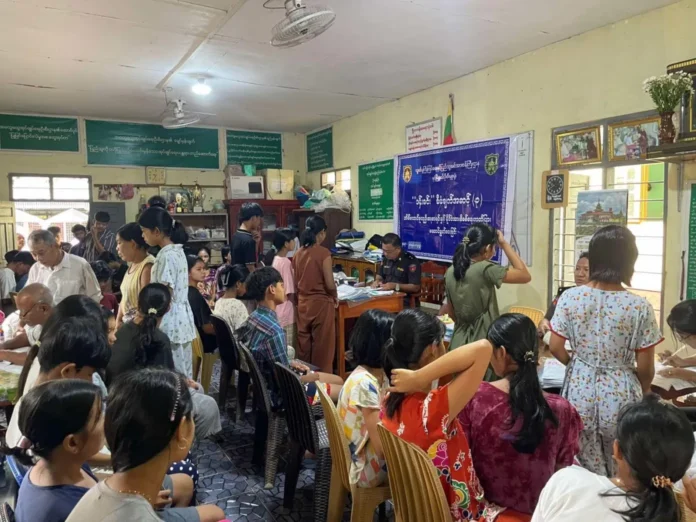
According to local sources, the number of non-resident migrants settling in relatively stable townships across Mon State has been steadily increasing during the pre-election period organized by the current military-appointed election commission.
Since September, these non-resident migrants have reportedly begun moving into suburban areas. Locals said they are neither internally displaced persons fleeing conflict nor migrant workers seeking employment.
A resident from Thanbyuzayat, who requested anonymity, said that more than 300 people are now living in makeshift tents in neighborhoods such as Setthit, Aung Zeya Extension, and Kyarkan Outskirts. Additionally, over 30 temporary huts have been set up in rubber plantations along the Mudon–Thanbyuzayat road.
“They started arriving around September. We notice them when they come to the market. In our neighborhood alone, there are nearly 200 small houses now. They’ve even built huts on government-owned rubber plantations. If this continues, it’ll soon turn into a village. There are also many new migrants in Kyaik Khami,” the resident said.
Some of these migrants in Thanbyuzayat are reportedly employed in garment factories, while others work as small-scale vendors or take up casual labor around the factory zones.
Similarly, in Mawlamyine City, migrants have been settling in areas such as Myintha Ya, San Gyi, Tharyarkone, and Thway Thauk Ywar Thit. A Mawlamyine resident said these include not only Mon people displaced from Karen State but also migrants from upper Myanmar.
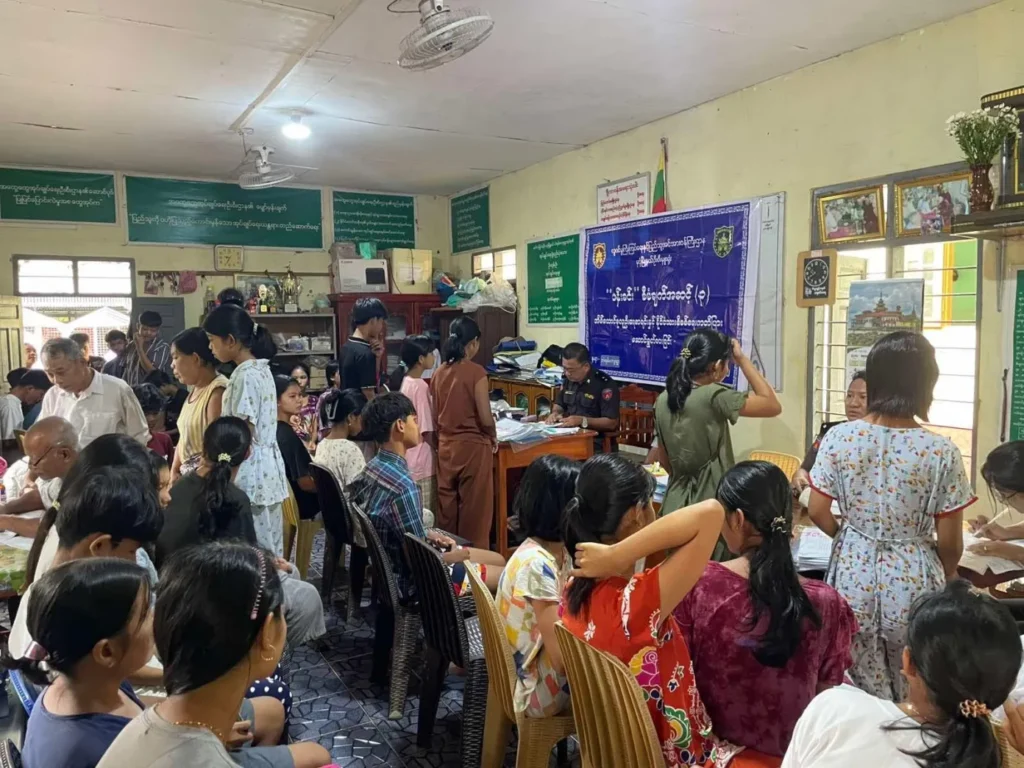
An election observer noted that during the pre-election period, local authorities in Mon State have been issuing national registration cards and household lists to these migrants, making them eligible to vote in the coming election.
“They come here to work and seem to be settling down. But they haven’t been here long. The authorities are registering them as Mon State residents. Just like in previous elections, the votes of migrant workers will likely be used again in Mon State,” the observer said.
Political sources close to several major parties stated that influential political groups are working to secure votes from these migrants in preparation for the military-appointed election expected at the end of the year.
Although Mon State has faced a shortage of labor in the agriculture and livestock sectors due to military conscription, locals said the number of migrant workers in the state has now increased significantly—possibly reaching tens of thousands—during the pre-election period.
Reports also indicate that the election commission’s administrative bodies have allowed these new arrivals to stay under “guest lists” and that many migrants now possess full sets of household registrations and Mon State national ID cards.
In the 2020 election, internal migrants were allowed to vote after residing in an area for 90 days. Although the Union Election Commission (UEC) has not officially revised this rule, administrative officials say that in the upcoming election, migrants may be permitted to vote after residing for only 60 days.